Haiku poetry
inspired by tails and tales of
canines in the news.
Don't let your dog out
wearing an expensive coat
or it might get mugged.
Loving chocolate,
Lucy was in the hot seat
when she stole the cake.
He stole his own dog
from the heartless vet, prompting
the "Save Buck" campaign.
Whatever you do,
don't try to give the K9
commands you'll regret.
With her friend the cat
in danger, Chloe refused
to quiet her bark.
He limped into an
emergency room without
human companions.
England's future queen
had to search through doggy-doo
to retrieve her gift.
Cop-hating Winston
has obedience classes
now that he's back home...
...Perhaps he suffers
from a post-traumatic stress
disorder, dog-style.
Daddy the Pit Bull
was an ambassador for
his breed. He'll be missed.
Monday, March 29, 2010


Friday, March 26, 2010
Friday Photography - Genoa Historic Town Hall
I recently spent almost a week in Ohio. I snapped a lot of pictures while I was there, including some around the Village of Genoa, Ohio. This is the community's Historic Town Hall.
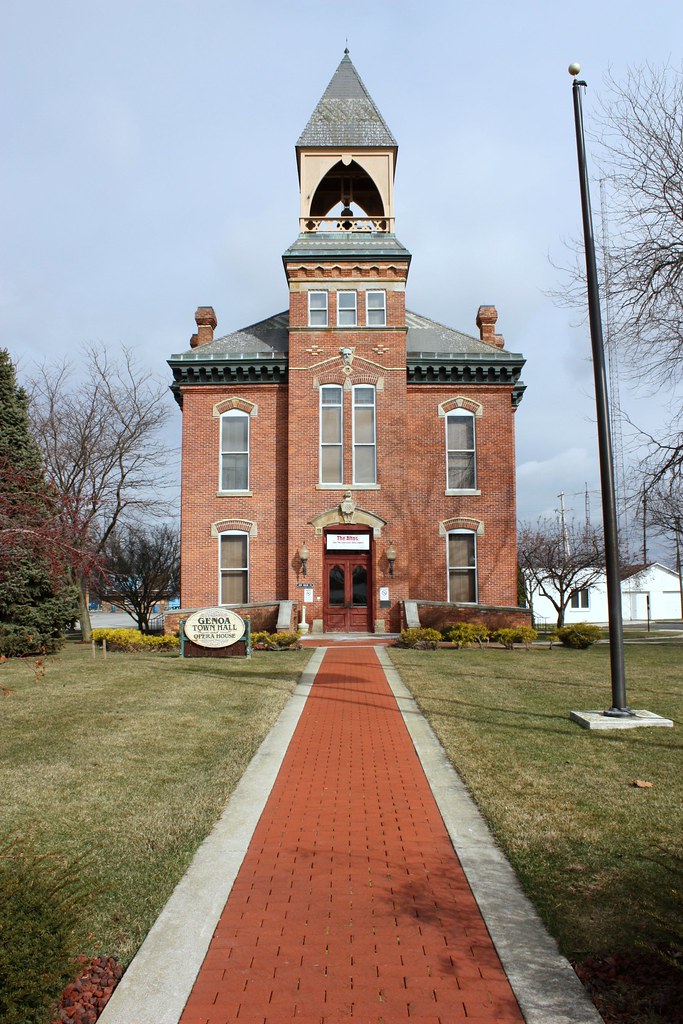
The Historic Town Hall was built in 1883. It is listed in the National Register of Historic Places and is classified as the oldest free-standing municipal building in Ottawa County. It is located at 509 Main Street, Genoa, Ohio.
I snapped about a dozen pictures around this cute little town. I really loved the old architecture, especially this building. Wonder what the locals thought of me wandering around with a camera strapped around my neck. Oh well, it was fun and when I return, I shall snap even more photos.
Genoa Historic Town Hall
The Historic Town Hall was built in 1883. It is listed in the National Register of Historic Places and is classified as the oldest free-standing municipal building in Ottawa County. It is located at 509 Main Street, Genoa, Ohio.
I snapped about a dozen pictures around this cute little town. I really loved the old architecture, especially this building. Wonder what the locals thought of me wandering around with a camera strapped around my neck. Oh well, it was fun and when I return, I shall snap even more photos.
Thursday, March 25, 2010
The Simpsons Contributions to the English Language
A poll that explores the contributions of "The Simpsons" to the English language? This is a study of words I can get behind!
 Today Translations, a London-based translation company with a network of 2,600 linguists in over 60 countries, polled 320 of its linguists across the world to try to find the “most valuable addition to the English language” from the world’s most popular animated TV series, "The Simpsons". Is it any surprise that the top word was "D'oh!" - Homer’s trademark grunt of irritation or frustration?
“D’oh!” scored 37% in the poll, followed by “introubulate” (“to get someone into trouble”) and “craptacular” (spectacularly crap). “Eat my shorts" (the equivalent of "Kiss my a**") came fourth. The phrase “cheeseeating surrender monkeys,” used to describe the French, came in ninth.
The Homerish "d'oh!" was entered into the Oxford English Dictionary in 2001 with this definition:
Doh: \ˈdō\
Variant(s): d'oh or dooh
Function: interjection
: Expressing frustration at the realization that things have turned out badly or not as planned, or that one has just said or done something foolish. Also (usu. mildly derogatory): implying that another person has said or done something foolish
Other notable Homerisms range from “lupper” (a large meal midway between lunch and supper) to “sacrilicious” (meaning either deliciously sacreligious or the delicious taste of eating something sacred).
A rival to Homer's contributions could be his son, Bart Simpson. In addition to "Eat my shorts" and “craptacular”, he coined the word “yoink” (to snatch by grasping hastily or by yanking) and who could forget “kwyjibo”, which he defined during a Scrabble game as “a big dumb balding Northern American ape with no chin” - otherwise known as Homer Simpson. Bart shares credit with his sister Lisa for the word, “Meh” - defined as an expression of profound indifference, much like how the word “whatever” is used by shrugging teenagers.
The Simpsons has been dubbed into over a dozen languages, including French, German, Spanish, Portuguese, Japanese and Arabic.
In fact, in the French version of the show Homer actually says “T’oh!”, instead of “D’oh!” because the French actor who dubs Homer’s voice misread the word the first time he played the role. He has never got round to correcting it.
D'oh! The French didn't like that phrase? Meh. The rest of the words, and their definitions, are as follows:
“D’oh!” scored 37% in the poll, followed by “introubulate” (“to get someone into trouble”) and “craptacular” (spectacularly crap). “Eat my shorts" (the equivalent of "Kiss my a**") came fourth. The phrase “cheeseeating surrender monkeys,” used to describe the French, came in ninth.
The Homerish "d'oh!" was entered into the Oxford English Dictionary in 2001 with this definition:
Doh: \ˈdō\
Variant(s): d'oh or dooh
Function: interjection
: Expressing frustration at the realization that things have turned out badly or not as planned, or that one has just said or done something foolish. Also (usu. mildly derogatory): implying that another person has said or done something foolish
Other notable Homerisms range from “lupper” (a large meal midway between lunch and supper) to “sacrilicious” (meaning either deliciously sacreligious or the delicious taste of eating something sacred).
"Homer Simpson must be the most influential wordsmith since Shakespeare,” says Jurga Zilinskiene, CEO of Today Translations. “And thanks to The Simpsons, combined with the power of the internet, ours must be the greatest golden age for new words since Shakespeare’s own.”
A rival to Homer's contributions could be his son, Bart Simpson. In addition to "Eat my shorts" and “craptacular”, he coined the word “yoink” (to snatch by grasping hastily or by yanking) and who could forget “kwyjibo”, which he defined during a Scrabble game as “a big dumb balding Northern American ape with no chin” - otherwise known as Homer Simpson. Bart shares credit with his sister Lisa for the word, “Meh” - defined as an expression of profound indifference, much like how the word “whatever” is used by shrugging teenagers.
The Simpsons has been dubbed into over a dozen languages, including French, German, Spanish, Portuguese, Japanese and Arabic.
“Translating The Simpsons into other languages can be a challenge”, says Jurga Zilinskiene of Today Translations.
In fact, in the French version of the show Homer actually says “T’oh!”, instead of “D’oh!” because the French actor who dubs Homer’s voice misread the word the first time he played the role. He has never got round to correcting it.
French translators have also had difficulties with another famous Simpsonism: “cheese-eating surrender monkeys”, a phrase first used in the show, says Ben Macintyre, back in 1995 by Willie, the Scottish school janitor, to describe the French. “In the French version of the show it is translated as ‘singes mangeurs de fromage. The word ‘surrender’, intriguingly, is not translated.”
D'oh! The French didn't like that phrase? Meh. The rest of the words, and their definitions, are as follows:
- d'oh! - (interjection. A grunt expressing frustration at the realisation that things have turned out badly or not as planned or that one has just said or done something foolish.)
- introubulate (verb. To get someone into trouble.)
- craptacular (adjective. A portmanteau of "spectacular" and "crap" i.e. spectacularly crap)
- eat my shorts (interjection: An insult or dismissal in the same vein as "Kiss my a**").
- knowitallism (noun. A word that describes Lisa Simpson's personality.).
- embiggen (verb. Enlarge or empower)
- meh (Interjection. An expression of profound indifference).
- learning juice (noun. Beer)
- cheese-eating surrender monkeys (noun. An unflattering description of the French as a nationality.)
- kwyjibo (noun. Originally, a word that enabled Bart Simpson to use all his letters in Scrabble. When challenged, he claimed that it was the name of "a big dumb balding Northern American ape with no chin.")
- banjologist (noun. An expert in banjo-based music)
- cromulent (adjective. "valid" or "acceptable")
- car-hold (noun. a garage)
- malparkage (noun. the state or condition of being illegally parked)
- yoink (verb. To snatch in a yanking-like fashion; also, to inflict a "wedgie" on someone by pulling or "yoinking" their underpants up sharply from behind, so as to wedge them uncomfortably between their buttocks)
Monday, March 22, 2010
Haiku News - March 22, 2010
"We know you're here to
arrest us, but we want to
finish our pizza."
Don't let them fool you.
Cheese is popular because
it is darn tasty.
Cheesehead credits the
Packers for saving his life
while he saved lives, too.
One day you could be
jogging along the beach and
be hit by a plane.
She was brave enough
to jump from the frying pan
over the cliffside.
The Midnight Knitter,
under cover of night, knits
tree and post sweaters.
Mad Scientist foods
are inappropriate for
human consumption.
Companies that change
to be more responsible
give me hope more will.
His look stopped traffic.
Perfect, because he wanted
to display his... strength.
The special effects
were too true-to-life at the
Battle of Hogwarts.
arrest us, but we want to
finish our pizza."
Don't let them fool you.
Cheese is popular because
it is darn tasty.
Cheesehead credits the
Packers for saving his life
while he saved lives, too.
One day you could be
jogging along the beach and
be hit by a plane.
She was brave enough
to jump from the frying pan
over the cliffside.
The Midnight Knitter,
under cover of night, knits
tree and post sweaters.
Mad Scientist foods
are inappropriate for
human consumption.
Companies that change
to be more responsible
give me hope more will.
His look stopped traffic.
Perfect, because he wanted
to display his... strength.
The special effects
were too true-to-life at the
Battle of Hogwarts.
Saturday, March 20, 2010
Belated Friday Photography - Dreary Road
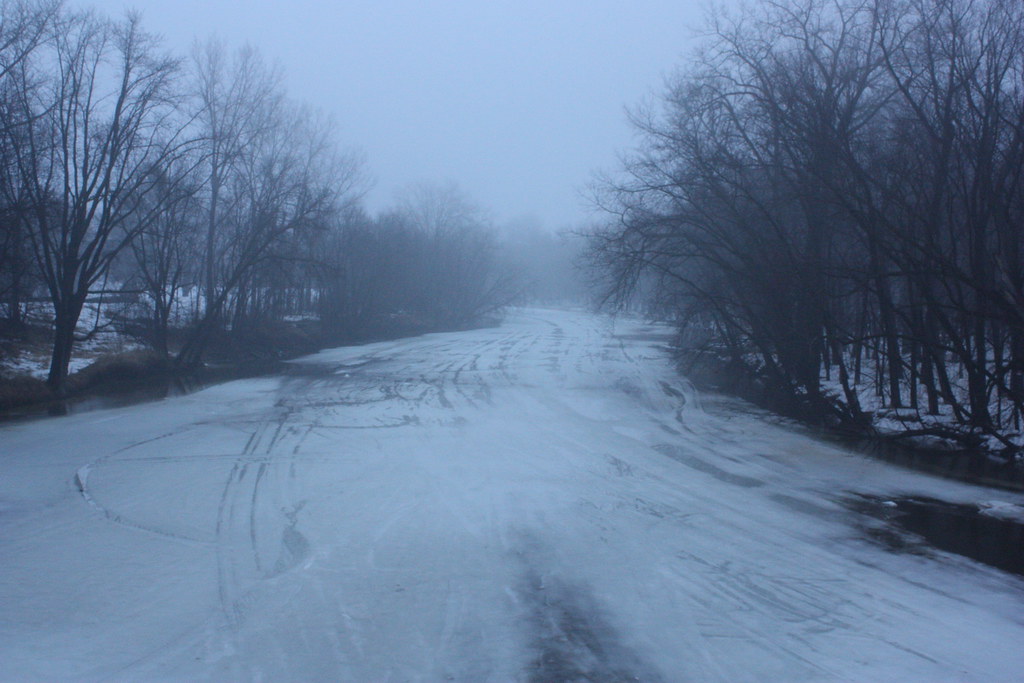
I committed a blogger Cardinal sin: I disappeared for a week without explanation. Sometimes it happens and it can't be helped. In this case, I was out of state for a family emergency. But blogs are only so important. Without real life to experience, there wouldn't be much to write about. With that, I present an easy Friday Photography entry a day late to re-start my blogging initiative.
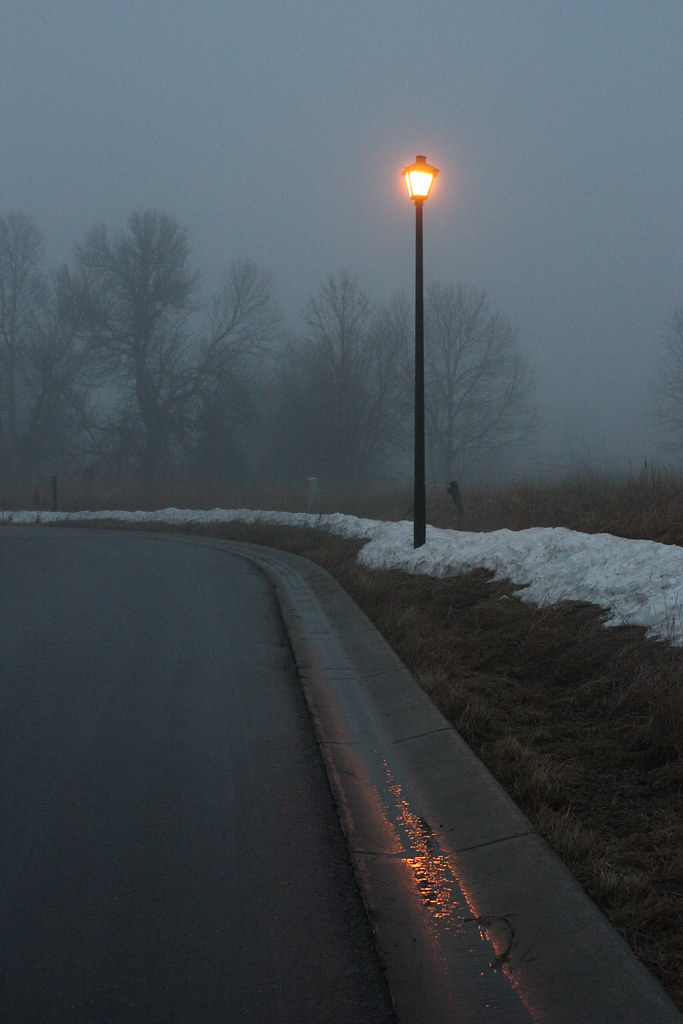
I took these pictures in the late afternoon to early evening of last Friday. That's also the same day I took the Foggy River pictures, but I took those around 7 o'clock in the morning. Even so, the moods feel really different to me. This picture perfectly describes how my head feels though: There's a light on, but it doesn't quite cut through the fog.

I can see similarities here, too: I feel drained. But the fog and low energy will go away once I finally catch up on sleep. The beautiful weather we've been experiencing has been working wonders on my outlook, too. I am so excited about spring!
Street Light in the Fog
I took these pictures in the late afternoon to early evening of last Friday. That's also the same day I took the Foggy River pictures, but I took those around 7 o'clock in the morning. Even so, the moods feel really different to me. This picture perfectly describes how my head feels though: There's a light on, but it doesn't quite cut through the fog.
Rainy Gutter
I can see similarities here, too: I feel drained. But the fog and low energy will go away once I finally catch up on sleep. The beautiful weather we've been experiencing has been working wonders on my outlook, too. I am so excited about spring!
Friday, March 12, 2010
Friday Photography - Foggy River
This morning I was up really early. Due to the rain and warmish temperatures we've been experiencing, the world was like a foggy dreamland. Feeling inspired, I grabbed my camera and went to go snap a few photos. The air was still, little traffic was around, and it was sooo quiet. To keep with that mood, I won't say another word and will just let the photos speak for themselves.
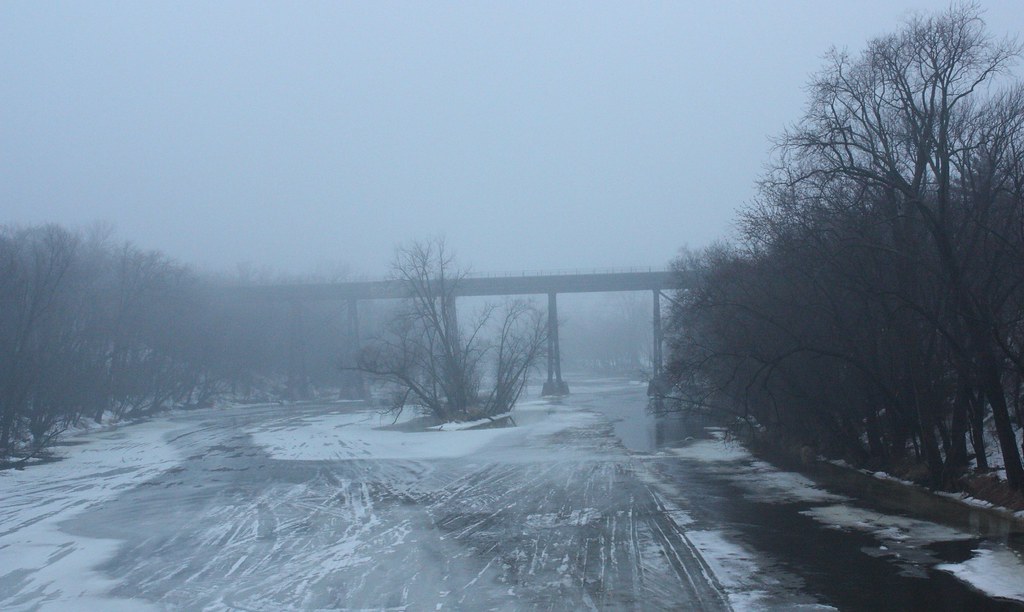


Train Bridge Through Fog
Foggy Morning
Spring Morning on the South Fork Crow River
Ice Framed Reflection
Wednesday, March 10, 2010
Speech or Sign Language, Its the Same to Your Brain
Earlier this week, I wrote about how not being able to remember a word, and having it "on the tip of your tongue," appears to be a universal phenomenon. It happens to people in all languages, including people who use sign language. Now, another similar study may have helped scientists understand a little bit more about the brain's language centers.
Two centers in the brain have long been associated with verbal communication: Broca's area, which is thought to be related to speech production, and Wernicke's area, which is associated with comprehending speech. Scientists suspected these areas might be specifically for speaking, because they are located near areas of the brain that are connected to moving the vocal chords, and to the auditory cortex, which is used to hear sounds.
Scientists reasoned that deaf people who use American Sign Language to communicate would use other areas of their brain to create and process language, such as parts located near the visual cortex, used for seeing. But when researchers took PET brain scans of 29 deaf native ASL signers and 64 hearing native English speakers, they found no difference in the brain. In both groups, Broca's and Wernicke's areas were equally active. Spoken or signed, these areas of the brain seem to be responsible for creating and processing language, an unexpected result.
A second, related study wanted to determine whether sign language taps into the same parts of the brain as charades. They wanted to figure out whether the brain regards sign language as more like spoken language, or more like pantomime gestures that mimic an action. The researchers found that the signers activated different parts of their brains when pantomiming versus when signing. Even when the sign is basically indistinguishable from the pantomime – when similar hand gestures are used – the brain treats it like language.
These discoveries suggest that something about language is universal and doesn't depend on whether people use their voices or their hands to talk. The Broca's and Wernicke's areas are tied to language, no matter whether it's spoken or signed. Furthermore, these studies also suggest that the brain was wired for language more than it was wired for speech.
Two centers in the brain have long been associated with verbal communication: Broca's area, which is thought to be related to speech production, and Wernicke's area, which is associated with comprehending speech. Scientists suspected these areas might be specifically for speaking, because they are located near areas of the brain that are connected to moving the vocal chords, and to the auditory cortex, which is used to hear sounds.
Scientists reasoned that deaf people who use American Sign Language to communicate would use other areas of their brain to create and process language, such as parts located near the visual cortex, used for seeing. But when researchers took PET brain scans of 29 deaf native ASL signers and 64 hearing native English speakers, they found no difference in the brain. In both groups, Broca's and Wernicke's areas were equally active. Spoken or signed, these areas of the brain seem to be responsible for creating and processing language, an unexpected result.
A second, related study wanted to determine whether sign language taps into the same parts of the brain as charades. They wanted to figure out whether the brain regards sign language as more like spoken language, or more like pantomime gestures that mimic an action. The researchers found that the signers activated different parts of their brains when pantomiming versus when signing. Even when the sign is basically indistinguishable from the pantomime – when similar hand gestures are used – the brain treats it like language.
These discoveries suggest that something about language is universal and doesn't depend on whether people use their voices or their hands to talk. The Broca's and Wernicke's areas are tied to language, no matter whether it's spoken or signed. Furthermore, these studies also suggest that the brain was wired for language more than it was wired for speech.
Monday, March 8, 2010
Haiku News - March 8, 2010
A filmmaker is
offering a prize to watch
his film to the end.
Scientists figure
people are born with a fear
of spiders and snakes.
There is a dark side
to chocolate, and its not
high cocoa-content.
Traffic light cameras
and short yellow lights bring cash
and deadly crashes.
In Romania,
the warning about drunks and
drivers is - special.
She tried to feed the
bear her hand - of course there was
alcohol involved.
Barney Fife locked the
new jail cell door behind him,
then shot his way out.
Seismologists say
the string of quakes is likely
"a coincidence."
Sarah Palin crossed
the Canadian border
to receive health care.
Karl Rove got into
a political fist fight
with a girl - and lost.
offering a prize to watch
his film to the end.
Scientists figure
people are born with a fear
of spiders and snakes.
There is a dark side
to chocolate, and its not
high cocoa-content.
Traffic light cameras
and short yellow lights bring cash
and deadly crashes.
In Romania,
the warning about drunks and
drivers is - special.
She tried to feed the
bear her hand - of course there was
alcohol involved.
Barney Fife locked the
new jail cell door behind him,
then shot his way out.
Seismologists say
the string of quakes is likely
"a coincidence."
Sarah Palin crossed
the Canadian border
to receive health care.
Karl Rove got into
a political fist fight
with a girl - and lost.
Sunday, March 7, 2010
Science Explores "Tip of the Tongue Moments"
When you can't remember the words you want to use, it can be... Shoot, what's that word? I've used it hundreds of times previously, yet suddenly the word escapes me. Has that ever happened to you before? Odds are the answer is yes.
We've all had "tip of the tongue" moments, times when we know the definition of a word we're trying to say, but can't remember what the word is. New research suggests this forgetfulness may have to do with how often we use certain words. The discovery may have even helped scientists understand more about how the brain organizes and remembers language.
One leading idea for what causes these memory lapses is that when people try really hard to think of a forgotten word, an unrelated, similar-sounding word may come up in the brain and impede their ability to access the right word. This phenomenon is called phonological blocking. Previous studies have shown that bilingual people have tip-of-the-tongue moments more often than those who speak only one language. Experts have suggested that this is because people who speak two languages have twice as many possible words in their heads from which to choose. Additionally, they have twice as many words to act as phonological blockers, too - in both languages!
For insight into tip-of-the-tongue anomaly, researchers tested people who speak two languages. Additionally, they tested deaf people who use American Sign Language to communicate. The idea was that signs can't "sound" the same, so signers shouldn’t experience the same phonological blocking.
The results? Even Signers have "tip-of-the-fingers" experiences. Additionally, just as speakers can often recall the first letter of the word they're thinking of (like my forgotten word starts with an "f"), signers could sometimes think of part of the sign they were trying to remember. Signers more likely to recall a sign's hand shape, location on the body, and orientation, and less likely to remember its movement. And because they have tip-of-the-tongue moments as often as speakers do (about once a week), it is doubtful that phonological blockers are to blame.
The conclusion of the scientists was that our tip-of-the-tongue moments happen out of forgetfulness, based on how frequently or infrequently we use the word we're trying to remember. Basically, the less often we use a word, the harder it is for our brains to access it. This may be why tip-of-the-tongue moments are more common in bilingual speakers - if they use each language about half the time, they use every word in each language about half as often as people who use only one language.
I've been known to have my fair share of "tip of the tongue" moments. It can't be helped, part of my job is to have my own personal thesaurus stashed in my brain, so I'm bound to forget a word once in a while. It makes me feel better to know that this is a universal occurrence that could actually be related to how many words one knows and how often they are used.
And of course, now I recall the word I was trying to remember - Frustrating! It doesn't take a scientist to prove that tip-of-the-tongue moments can be extremely frustrating!
We've all had "tip of the tongue" moments, times when we know the definition of a word we're trying to say, but can't remember what the word is. New research suggests this forgetfulness may have to do with how often we use certain words. The discovery may have even helped scientists understand more about how the brain organizes and remembers language.
One leading idea for what causes these memory lapses is that when people try really hard to think of a forgotten word, an unrelated, similar-sounding word may come up in the brain and impede their ability to access the right word. This phenomenon is called phonological blocking. Previous studies have shown that bilingual people have tip-of-the-tongue moments more often than those who speak only one language. Experts have suggested that this is because people who speak two languages have twice as many possible words in their heads from which to choose. Additionally, they have twice as many words to act as phonological blockers, too - in both languages!
For insight into tip-of-the-tongue anomaly, researchers tested people who speak two languages. Additionally, they tested deaf people who use American Sign Language to communicate. The idea was that signs can't "sound" the same, so signers shouldn’t experience the same phonological blocking.
The results? Even Signers have "tip-of-the-fingers" experiences. Additionally, just as speakers can often recall the first letter of the word they're thinking of (like my forgotten word starts with an "f"), signers could sometimes think of part of the sign they were trying to remember. Signers more likely to recall a sign's hand shape, location on the body, and orientation, and less likely to remember its movement. And because they have tip-of-the-tongue moments as often as speakers do (about once a week), it is doubtful that phonological blockers are to blame.
The conclusion of the scientists was that our tip-of-the-tongue moments happen out of forgetfulness, based on how frequently or infrequently we use the word we're trying to remember. Basically, the less often we use a word, the harder it is for our brains to access it. This may be why tip-of-the-tongue moments are more common in bilingual speakers - if they use each language about half the time, they use every word in each language about half as often as people who use only one language.
I've been known to have my fair share of "tip of the tongue" moments. It can't be helped, part of my job is to have my own personal thesaurus stashed in my brain, so I'm bound to forget a word once in a while. It makes me feel better to know that this is a universal occurrence that could actually be related to how many words one knows and how often they are used.
And of course, now I recall the word I was trying to remember - Frustrating! It doesn't take a scientist to prove that tip-of-the-tongue moments can be extremely frustrating!
Friday, March 5, 2010
Friday Photography - Stop Signs of Spring
Spring is on its way! The sun is out, temperatures are rising, and the snow is melting. And that results in yet another, less recognized sign of spring: The STOP sign.

Stop Signs of Spring
I spotted this on a walk with my dogs. Needless to say, we stopped, then chose an alternate route. Pre-spring is a messy affair.
Thursday, March 4, 2010
National Grammar Day
National Grammar Day is being celebrated today, March 4, 2010. It's a great day to review the subject of grammar, especially for writers!
There are many articles out there right now to celebrate the day, including 5 Easy Ways to Learn Grammar With The New York Times, National Grammar Day: E.B. White and Dr. Seuss would be proud, and National Grammar Day 2010: Resources And The WORST Grammar Mistakes Ever (PHOTOS). Additionally, the National Grammar Day website offers their Top 5 grammar tips:
There are many articles out there right now to celebrate the day, including 5 Easy Ways to Learn Grammar With The New York Times, National Grammar Day: E.B. White and Dr. Seuss would be proud, and National Grammar Day 2010: Resources And The WORST Grammar Mistakes Ever (PHOTOS). Additionally, the National Grammar Day website offers their Top 5 grammar tips:
- Affect Versus Effect
- Who Versus Whom
- Lay Versus Lie
- Ending a Sentence With a Preposition
- "Between" Versus "Among"
Conjunction Junction
A Noun is a Person, Place or Thing
Verb
Preposition
Interjections!
Lolly Lolly Lolly Get Your Adverbs Here
Monday, March 1, 2010
Haiku News - March 1, 2010
Half of all organ
transplants in the U.S. come
from living donors.
Should he spend money
on dialysis or buy
food for the table?
Detractors complain,
even as they gladly take
credit for it all.
He needed more speed
so he strapped an improvised
rocket to his back.
The home fires still burn
in the ghostly coal-town known
as Centralia.
Aged 93, she
left behind some 2,000
living descendents.
BBC ruins
565-year
tradition. But why?
44 states have
pending bills to tell Congress
where they can stick it.
Michelle Bachman is
a she-devil and monster:
Her word choice, not mine.
The Tea Party may
have enough rope with which to
hang itself, ere long.
transplants in the U.S. come
from living donors.
Should he spend money
on dialysis or buy
food for the table?
Detractors complain,
even as they gladly take
credit for it all.
He needed more speed
so he strapped an improvised
rocket to his back.
The home fires still burn
in the ghostly coal-town known
as Centralia.
Aged 93, she
left behind some 2,000
living descendents.
BBC ruins
565-year
tradition. But why?
44 states have
pending bills to tell Congress
where they can stick it.
Michelle Bachman is
a she-devil and monster:
Her word choice, not mine.
The Tea Party may
have enough rope with which to
hang itself, ere long.
Subscribe to:
Posts (Atom)