Friday, April 30, 2010

Friday Photography - Lazy Cat

It has been a rainy week. Not even stormy, just drizzly. When the weather gets wet and dreary, I get lazy. Though I've gotten a lot of work done, I didn't really have any adventures. I had plenty of naps, though. Very cat-like.

Making the Most of It

Maybe there will be more adventures next week.
Thursday, April 29, 2010

A Day to Honor Dead Poets

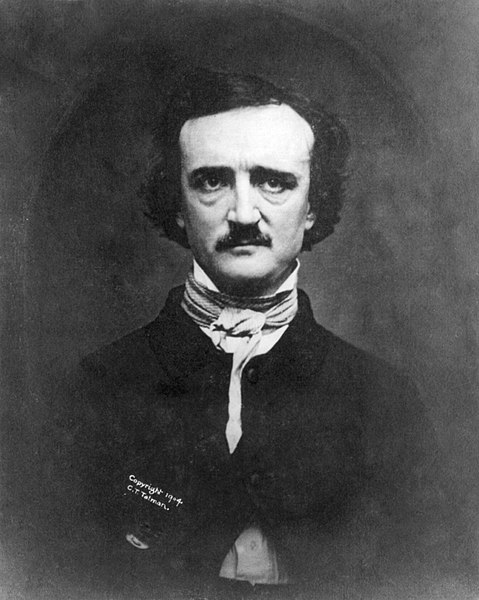
Walter Skold, amateur poet and the Founder of the Dead Poets Society of America, has a new mission — to create a Dead Poets Remembrance Day. The former teacher would like to see it celebrated on October 7, the day of Edgar Allan Poe's death in 1849.

The Maine resident started his new project with a poetry reading on Friday, April 23, 2010, beginning a 22-state tour of the graves of dead poets. His "Dead Poets Grand Tour 2010" kicked off on what is believed to be the anniversary of William Shakespeare's birth in 1564. The launching point, Portland's Eastern Cemetery, is the burial place of British and American sea captains cited in Henry Wadsworth Longfellow's poem "My Lost Youth."

As in his 2009 tour of dead poets' graves, Skold will drive a cargo van, dubbed the Poemobile, to the graveyards. He has enlisted 13 current and former state poets laureate to help drum up support. This year, he will also be accompanied by a couple from Georgia who will film the journey for a documentary.
Tennessee's poet laureate, Margaret Vaughn, noted that April is National Poetry Month. She said it would be nice to have a day set aside to honor poets, as well.

"When people write speeches, it's poets that they quote most of the time," she said. "I think to take one day to really recognize them would be great."

Since founding the Dead Poets Society of America in 2008, Skold and others have documented the final resting places of hundreds of poets. He currently has a list of the graves of more than 600 American poets.

To generate interest in documenting poets' graves, a photo and video contest will offer $4,000 in prize money. Read the rules of the contest to find out how to enter.

The Dead Poets Society of America's name was partly inspired by the 1989 Robin Williams movie "Dead Poets Society," about an nonconformist English teacher who inspires his boarding school students to love poetry. The society's motto is: "We Dig Dead Poets ... You Dig?"

Monday, April 26, 2010

Haiku News - April 26, 2010

Don't use that make-up
"Tester": It is tainted with
deadly e. coli.

Aliens could be
just like humans: Destructive,
careless, and hostile.

The Great Commandment
is lost on many. Let it
be rediscovered.

Buddy the Hero
shepherded help to the home
slowly burning down...

...While Ebonyser
needed an alert shepherd
to protect his life.

This true Lucky Duck
needed to be rescued two
times in the same day.

The Mystery of
the Missing Tortoise has had
a happy ending.

Both men and women
boost their weary moods with a
little chocolate.

While some countries make
pot legal, some have their sites
set a bit "higher."

Bizarre murder plots
like this make me wonder where
they got the idea.

Friday, April 23, 2010

Friday Photography - Target Field

On Thursday, April 22, 2010, I finally had my first chance to see outdoor baseball at Target Field. I had planned on doing a review for it, but some trouble at the Will Call booth, which had my tickets, meant I didn't get to my seat until the bottom of the 5th inning. I was not happy. Neither was the person who gifted me the tickets.
Target Field Sign

Even though the Minnesota Twins lost to the Cleveland Indians, I had a great time sitting outside in the sun watching baseball as it should be seen for those last four innings I was actually in the stadium. Josh and Iwere in good spirits after we left, despite missing the first half of the game.

Target Field

I pondered whether or not I should write a review that was half bad, half good, and not thoroughly explored. Let's face it, once I finally made it in all I wanted was a brat, a beer, and baseball. I didn't feel I had paid enough attention to really do what I would like to do with the review.

Twins Logo

I didn't have to think too long. Shortly after getting home and flopping onto the couch, the kind soul who had given us the tickets called to say that she had called to complain about the mix-ups at the Will Call booth and we are going to be the lucky recipients of two more coveted tickets to a Twins game at Target Field. There will be a review, and this time I hope to see a night game!

Go Twins!

Wednesday, April 21, 2010

Haiku News - April 21, 2010

In this busy week,
my darling Haiku News has
been slightly delayed.

He may have never
told a lie, but he earned steep
library late fees.

Not just food for the
soul, dark chocolate has some
medicinal traits.

After the food flew,
it was the lunch ladies who
had the final laugh.

In his old estate,
workers discovered Lennon's
bottle of "Drink Me."

In death, may he help
his charges to know they must
stop chasing their highs.

One would have thought that
Danny Glover would have been
too old for this shit.

They loved for twenty
years, but then their carefully
laid plans were ignored.

An astonishing
world of undiscovered life
exists yet on earth.

Yes, your naughtiest
librarian fantasies
are probably true.

The honesty of
the Good Samaritan could
have labeled him thief.

Friday, April 16, 2010

Friday Photography - April Flowers

Though the phrase is usually "April showers bring May flowers", there are plenty of flowers blooming already in April, and it makes me very happy. I snapped these photos around the Ames Florida Stork House in Rockford, Minnesota.

Lavender Pinwheel Flower

Bee in a Flower Patch

A single, fat yellow jacket was feasting on this flower patch. If you look close, you can see him on one of the center flowers. I am looking forward to the weather warming up and more flowers sprouting!

I have to ask every time I can't identify a flower: Does anyone know what these are?

Also check out this beautiful Red & Yellow Tulip I captured. Beautiful!

Thursday, April 15, 2010

Text-Slang Creeping Into Academic Work

Thanks to text messaging, writing as an activity has increased,  in a manner of thinking. Unfortunately, quality writing has steadily decreased - which can also be attributed to texting.

Text speak, with it's own version of shorthand and slang, may be appropriate for a quick message to a friend, but it is completely inappropriate for school work and assignments. However, texting language has been seeping into academic work, leaving college professors simultaneously perplexed and exasperated.
"Despite the fact that I happen to be perfectly capable of reading any incoherent drivel you may send to my (e-mail) inbox directly from your phone keypad, 'wut up ya I cnt make it 2 clss lol' is insanely unprofessional," reads the syllabus of Alejo Enriquez, a Cal State East Bay instructor.

"Therefore, I am imposing a higher standard of grammar, spelling, and use of the enter key upon you and kindly request that all e-mails sent to me resemble any other letter to your teacher, supervisor, grandparents or parole officer."

Young adults and teens are constantly communicating via text messaging, more-so than older adults. According to a 2008 survey by the Pew Internet & American Life Project, two-thirds of middle- and high-school students have accidentally used instant-messaging-style words in their work, while a quarter admitted using emoticons in assignments. Switching back and forth between the informal communication with friends and formal communication with teachers and professors is proving difficult for some.

Text-speak isn't just invading homework and papers. The flippant mode of communication appears in e-mail correspondences from student to professor. A word to the college-bound: Professors didn't go through years and years of school and get that nifty PhD so you can address them as "Yo teach!" They are there to help you learn, addressing them respectfully will get you a lot further in their classes.

College always has been a place for students to learn how to communicate appropriately. After all, the education is supposed to prepare them for their future careers. Teaching students to ditch the tech-speak in formal, working situations is just the latest step in that education.

Personally, I just can't bring myself to use text shorthand in any situation. I spell out nearly every word when I'm texting, which isn't often. And when I get texts with lots of abbreviations, I swear it takes me twice as long to figure out what it says than if the person had just entered the extra letters to complete the word. I fully support ditching text-slang.

Monday, April 12, 2010

Haiku News - April 12, 2010

29 students
"died," but to their loved ones, it
felt eerily real.

Even the most famed
supper throughout history
has been supersized.

The Farla's brought new
meaning to the idea of
finding religion.

About 1 out of
every 5 people believe
they walk among us.

Before you visit
a foreign country, be sure
to research their laws.

Threatened by True Blood,
they'll explore the Britishness
of vampirism.

Pedigree aside,
left on their own, rabbits will
do what rabbits do.

"The fox that napped on
the roof" almost sounds like a
childrens story book.

Soaring with the planes,
Philadelphia eagles
have beaten the odds.

Healthy triplet calves
are a barnyard rarity.
And triple the cute.

Friday, April 9, 2010

Friday Photography - Life & Death at the Park

I recently took a walk along my favorite trail through the woods at Lake Rebecca Park Reserve. I've been avoiding it, because for some reason this forest "reserve" is under construction: They're burying a natural gas pipeline that cuts through the park.

Dead Trees

It breaks my heart to the scarred landscape and the piles of dead trees.

Dead Tree

Especially large, old trees like this one. Look at how many rings it had! It's said that the plans avoided a major owl habitat. I wonder why putting it through the park was even an option.

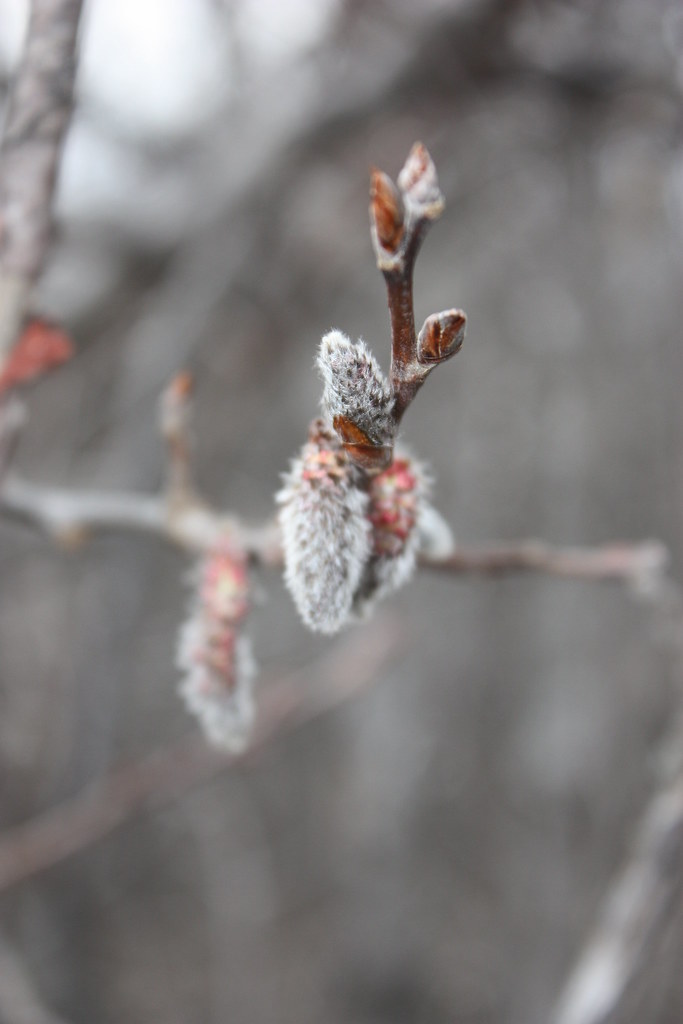
Like a Pussy Willow

I did spot signs of new life in the forest, though. That's one thing about nature: It doesn't know it's being destroyed, it just does it's best to grow, thrive, and reproduce. I'm not quite sure what type of tree this is though. These little gray buds are just beginning to grow.

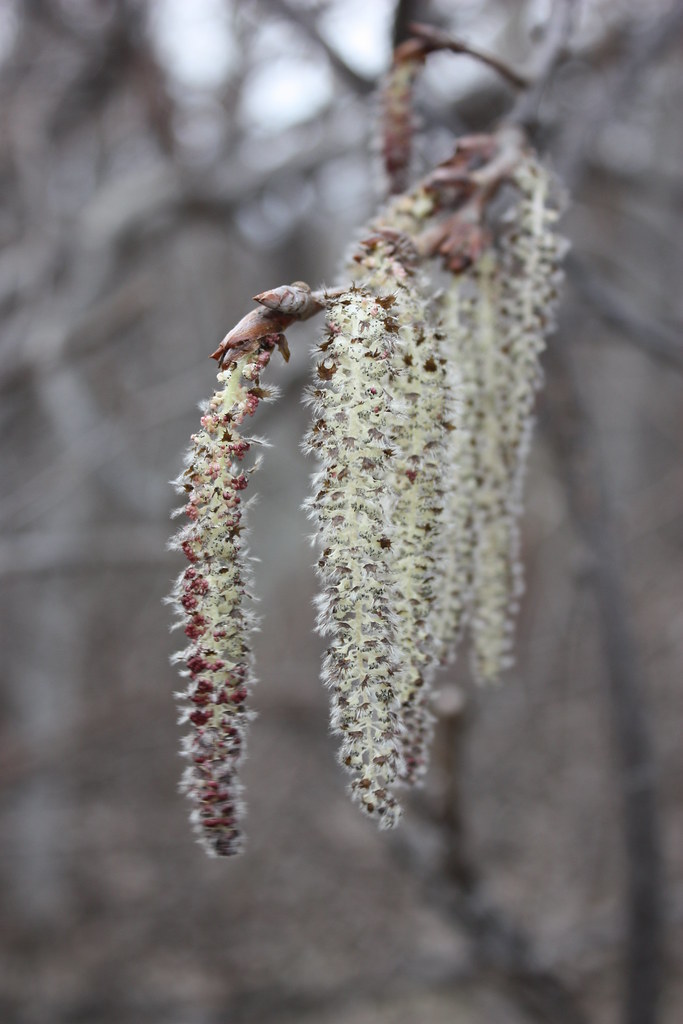
Fuzzy Tendrils

The rest of the fuzzy buds on the tree looked like this. I've never seen them before! They're very interesting looking, especially since there were no leaves on the tree, just these fuzzy dreadlock-looking things. And this was the only tree I saw like this on my walk through the woods. Does anyone know what kind of tree this is?


Thursday, April 8, 2010

Laughter: The Most Primitive Language

Laughter is universal. It sounds basically the same across humanity, with no discernible distinctions as a result of differences in language or culture.

Laughter is primal. No one teaches another how to laugh, yet humans somehow just know how to do it, even before learning to speak. Other primates, dogs, hyenas, even rats have been known to laugh.

Laughter is social. Humans especially like to laugh with family and friends.

Laughter is infectious - sometimes just hearing other people laugh can inspire a chuckle or giggle. And how often have you experienced something hilarious when you were alone and you just couldn't wait to tell someone?

Laughter is unique. So it should come as no surprise that scientists and researchers take laughter quite seriously.

Over decades of research, neuroscientist Robert Provine, a professor with the University of Maryland Baltimore County, has boiled laughter down to its basics.
"All language groups laugh 'ha-ha-ha' basically the same way," he said. "Whether you speak Mandarin, French or English, everyone will understand laughter. ... There's a pattern generator in our brain that produces this sound."

Each "ha" is about one-15th of a second, repeated every fifth of a second, he said. Laugh faster or slower than that and it sounds more like panting or something else.
Provine also says that laughter is mostly about social responses rather than reaction to a joke. Some studies suggest that only 10%-20% of laughter is generated by anything resembling a joke. The other 80%-90% are in reaction to dull non-witticisms that aren't meant to be funny. Some people even laugh at inappropriate times when they don't mean to.
"Laughter isn't under our conscious control," says Provine. "We don't choose to laugh in the same way that we choose to speak."
Unlike speech, laughter isn't completely a form of self-expression. One function of laughter may be to trigger positive feelings in other people. When you laugh, the people around you might start laughing in response. After some time and some chuckles, a whole group of people can become cheerful and relaxed. Laughter can ease tension and foster a sense of unity. This would have been very important for small groups of early humans.
"Laughter above all else is a social thing," Provine said. "The requirement for laughter is another person."
Studies of laughter in rats could help further the study of laughing humans. How does one make a rat laugh? It turns out rats love to be tickled. They return again and again to the hands of researchers tickling them. How cute is that?


Northwestern University biomedical engineering professor Jeffrey Burgdorf has found that laughter in rats produces an insulin-like growth factor chemical that acts as an antidepressant and anxiety-reducer. The same thing probably happens in humans, too. This would give doctors a new chemical target in the brain in their effort to develop drugs that fight depression and anxiety in people.

While studying laughter is serious work to researchers, it sounds silly when they're seeking research grants. For that reason, Northwestern's Burgdorf avoids the word "laughter." He calls it "positive emotional response."

Sara Duane is a freelance writer in the Twin Cities area of the great state of Minnesota.   

Monday, April 5, 2010

Haiku News - April 5, 2010

A spiritual
mission to ask their fish to
return to Cali.

Australia’s Great
Barrier Reef is at risk
from China's coal ship.

The burning of socks
is a spring-time ritual
I can get behind.

Skyaking: Just One
more cracked "sport" in which I will
not participate.

They thought she was nuts,
she thought she was possessed: It
seems neither were right.

Big corporations
don't care about your safety,
just their bottom line.

More prison inmates
should be forced to work for their
entertainment hours.

The Mexican Wolf
who went on the lam needs a
new pack to roam with.

The Internet is
blamed for accelerating
species extinction.

Captive tigers may
save their species - if we can
save them from China.

Friday, April 2, 2010

Friday Photography - Millbury School #1

I love old buildings. Half of the reason I find them to be interesting has to do with their history. Especially if they're particularly beautiful buildings that have been abandoned. Take for instance this abandoned school I stumbled across recently when I was passing through Millbury, Ohio.

Millbury School #1

It was built in 1909, as indicated by the molding above the door. But there was no way of knowing when it was abandoned. As I snapped pictures, I expected that I wouldn't find any information at all about this school, but I was wrong.

Millbury School Entrance

At Old Ohio Schools, I found this photograph of students in front of Millbury School #1. You can't see it in my pictures, but an addition has been built on the far side since the school was built. I was in a hurry to go to a family gathering so I only had a few minutes to even snap these few photos, which focused on the more interesting portion of the building.


I also found a news article from April 23, 2008, about Millbury School #1 going on the auction block, but couldn't find if it had actually been sold:
On Tuesday the Lake School district will put the century-old Millbury school, on Ohio 795 and Main Street, on the auction block. The auctioneer Chuck Bell, of Re/Max Preferred Associates, Oregon, said the auction will be “absolute.” By the end of the day, the building will be sold.

As with Commodore, citizens have expressed interest in taking on the building. The 1909 Committee has raised $50,000 so far in hopes that the district would lease the group the building that could then be turned into a senior center, theater or a library.
Well, it's not a senior center, theater, or a library, but there is a recession happening right now and Millbury is a pretty small town. I don't imagine a lot of new developments will be happening there. Next time I end up in Ohio, I'd like to find this school again and take more detailed photos. In the meantime, you can check out this photo set by oldohioschools.

Thursday, April 1, 2010

Song Birds Give Insight to Human Language

An analysis of the zebra finch genome has identified more than 800 genes that have a role in the baby male chicks' ability to learn songs from their fathers.

The work carried out by a consortium of more than 20 international institutions could also help identify the genetic and molecular origins of speech disorders in humans. Researchers say it could lead to genetic clues related to autism, stroke, stuttering and Parkinson's Disease.
"The zebra finch genome will be a valuable tool for neuroscientists," says lead author Professor Wes Warren, of Washington University's Genome Centre, who also helped organize the genome sequencing project.

"They can now carry out studies to identify a core set of genes in the zebra finch brain involved in both hearing and producing song and then look to see if any of these genes are disrupted in people with speech disorders."
The male zebra finch (Taeniopygia guttata) was chosen by researchers for several reasons. The birds are easy to work with in captivity. Their quick growth allowed researchers to study whole generations in just three months. Mostly, the finch was chosen because of its ability to learn complex songs from its father, in a similar manner to how humans learn speech from parents. Young male fledglings at first seem to make random sounds, much like the babbling of human babies. With some practice, the young bird soon learns to imitate his father's song precisely. After the bird has mastered his family's song, he will sing it for the rest of his life and teach it to his offspring.

The analysis of the zebra finch genome showed that during the period when a young male finch is learning its family song, many genes in the brain get switched on or off. It was also found that many of the genes are an unusual type whose main function seems to be switching other genes on and off.
The system for singing has much more complexity than we imagined,” said co-author Erich Jarvis, Ph.D., Duke professor of neurobiology and a Howard Hughes Medical Institute Investigator.

“In the part of the brain that controls learning how to sing, about 5 per cent of the genes are regulated by the action of singing. I thought there might be 100 genes, but our laboratory found that there are at least 800 regulated genes turning off and on, and there may be many more.”
"The sophistication, the speed and the complexity is just amazing to me," [Prof. Wes] Warren says. And even though birds diverged from human ancestors more than 300 million years ago, both species seem to rely on many of the same genes for vocal communication, he says.
Scientists think this type of gene may be one of the keys to making vocal learning possible in a limited number of species, including bats, whales, elephants, birds and people. The research could help find genetic explanations for disorders that affect speech or communication. The findings could also have an impact on research into deafness and language learning after the critical learning period.

Zebra finches are just the second bird to have their genome sequenced. The first was the chicken.