Saturday, April 30, 2011

ACK!

At long last, and on the last day no less, a non-haiku poem in honor of National Poetry Month, inspired by the previously shared poem, "OCK":

ACK!
A bruised and broken victim of a sneak attack,
Lay face down on frigid pavement in a grim, dark shack.
"This isn't just your punishment, this is payback!"
Red hot bullets fled the chamber and the world went black.

I so liked the cadence, brevity and darkness of "OCK," which originates from a comedic opera, that I wanted to use it as a basis for a poem. It has a singular rhyme scheme on a hard consonant, a 12 / 13 / 12 / 13 syllable count and a death-related topic. An entertaining way to kill some time and stretch the creative muscles. What do you think?

Wednesday, April 27, 2011

Gender Stereotyping & Word Clouds: A Random Post

Just a quick one for today. Saw this post at The Achilles Effect, "Word Cloud: How Toy Ad Vocabulary Reinforces Gender Stereotypes" and found it to be quite intriguing for two completely unrelated reasons.

First, the most obvious one is the shocking choices of words that are used to appeal to boy children when it's laid out as plainly - and literally graphically - as Crystal has displayed here, according to her research. Even with what she has said is just a starting point, and not by any means an exhaustive record, it’s not hard to recognize that the generalities are basically true. Simply watch television on a Saturday morning or Cartoon Network pretty much any time of day and the contrasts in word choices for ads aimed at boys vs. girls are as obvious as the differences in typically gender-assigned colors. I'm more surprised by the top word for marketing at young females being "love." Just from my own experience I feel like I hear the word "girl" repeated more often than anything in the advertisements that are aimed at them. As if girls don't know they're girls or as if marketers trying to attract their attention, sort of like "Here girl! Look over here at the shiny things! Good girl!"

But I digress.

Second, how fun is Wordle? It makes me want to do my own little vocabulary- or language-related research project so I can make my own cloud of words in graphic form. Now for an idea on what to explore...

Sunday, April 24, 2011

Iron Age Hilltop Communication, Recreated

[My first "blog blurb," because I don't think I'll ever get to blogging more regularly until I master this type of short, concise post]

Forget cell phones, telephones or e-mail. A unique experiment has literally shed light on how Iron Age people communicated across vast distances from hilltop to hilltop about 2,500 years ago.
"It was a success," said archaeologist Erin Robinson. "It captured the public's imagination and we made extra links we did not think were possible."

"Most of the hill forts across the surrounding landscape can be seen from each other," explained Ms Robinson from Denbighshire's Heather and Hillforts project.

"The experiment was aiming to see if the glowing fires could have been seen across the hills and acted as a communication or warning system."

"It was fantastic," she said. "We saw all the way to a hilltop in Cheshire, which we weren't sure we'd be able to do."

Friday, April 22, 2011

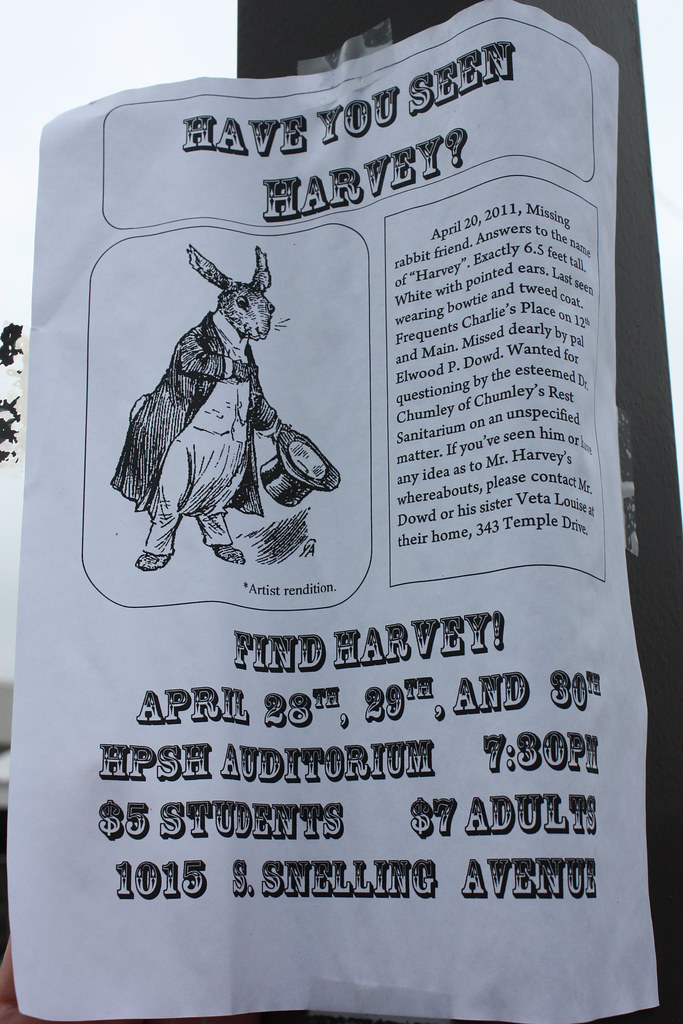
Friday Photography ~ Harvey

This caught my attention in St. Paul today and liked it so much I snapped a photo. Love the film version of "Harvey," but I've never seen the play. And I'm a sucker for just about anything theatrical.

Have You Seen Harvey?

April 20, 2011, Missing rabbit friend. Answers to the name of "Harvey". Exactly 6.5 feet tall. White with pointed ears. Last seen wearing a bowtie and tweed coat. Frequents Charlie's Place on 12th and Main. Missed dearly by pal Elwood P. Dowd. Wanted for questioning by the esteemed Dr. Chumley of Chumley's Rest Sanitarium on an unspecified matter. If you've seen him or have any ideas as to Mr. Harvey's whereabouts, please contact Mr. Dowd or his sister Veta Louis at their home, 343 Temple Drive.

Find Harvey!
April 28th, 29th and 30th, 2011
HPSH Auditorium 7:30 PM
$5 Students, $7 Adults
1015 S. Snelling Avenue
Check it out, support high school theater. It gives teens public speaking skills that will come in handy later.

Tuesday, April 12, 2011

Haiku News - April 12, 2011

Stolen credit card
canceled, then came the flowers:
"Thanx for ur money!"

Protecting "their" nest,
a goose and a deer have formed
an unlikely pair.

"Hey you! Subscribe to
Dish Network and we'll throw in
a shotgun for free."

At every level,
this sounds like a story that
The Onion might print.

He crossed the ocean
with a little help from his
friends - and a sweet raft.

 Also:

Langology news
in haiku form to amuse
and entertain you.

Saturday, April 9, 2011

27% of Congressional Communication is Taunting

"Your mother was a hamster and your father smelt of elderberries!" ~ Taunting French Soldier played by John Cleese, Monty Python and the Holy Grail

How people address each other in a conversation or negotiation determines the success or failure of the end result. This isn't rocket science, as toddlers first learning language are capable of figuring it out. Yet as adults, we don't always take this into account - even the people who are running the country (maybe especially this group).

A Harvard University professor has analyzed Congress' behavior, using computers to look for trends in members’ language and writings. What he has learned may help explain why the legislative branch has such trouble closing on negotiations for, well, pretty much anything. Modern representatives spend about 27 percent of their communications simply taunting each other.
“It’s jarring and surprising,” said Prof. Gary King, an expert in using computers to find patterns in large amounts of data. And, King said, probably counterproductive if we want Congress’s members to trust one another enough to make deals. The entire government may go bankrupt…We probably want our representatives to be listening to each other rather than calling each other names.”
To determine his results, King and two graduate students analyzed 64,033 press releases sent out by all U.S. senators between the years of 2005 and 2007. They used a computer program to sort them into different categories, based on their content.
  1. Credit-claiming. That involves a legislator trumpeting his own role in securing a bridge or a dam or some other thing voters want. “The government did this thing because of me."
  2. Position-taking. This is the point of congressional expression. "I have this stance on this ideological issue."
  3. Advertising. This non-partisan method of getting a politician’s name out in the media could be as simple as recognizing a hometown team or local celebrity. “Look at me! I’m a member of Congress!
These three categories are well known to political scientists, whose Grand Unified Theory of Congressmen holds that these are the primary methods legislators will use to express their selves. But some news releases King and his team examined didn’t fit into them.

This category is where the taunting falls in. It's not a new idea that legislators love to insult and make jabs at each other. How much they do it just has not ever been quantified before.

According to his study, legislators spend more than a quarter of their time outwardly disrespecting each other. The members guiltiest of hurling abuse were those whose districts were considered “safe,” or strongly held by their party.

And the documents examined were from several years ago, before the financial downturn began and the current high-pitch rhetoric that seems to be escalating. Examining a sampling of 48 much more recent news releases from three top congressional Democrats and three top Republicans showed that 20 percent were mainly about taunting the other side. Some examples:
  • Senate Majority Leader Harry M. Reid (D-Nev.) sent one out on proposed Social Security changes that said, “Republicans have shown they couldn’t care less about those who have the least.”
  • House Majority Leader Eric Cantor (R-Va.) sent out one on the anniversary of the federal health-care law saying, “Democrats have not displayed the same interest in listening to the American people.”
Some think the taunting serves a purpose in that it sparks the public's interest and makes their opinions on an issue clear. However, I concur with the conclusion of Prof. King, which is that the taunting distracts Congress from its most basic mission of finding common ground to solve national problems. A vast majority of the time they spend name-calling and ridiculing each other could be better spent working on legislation that's going to put people to work, stimulate the economy and moving towards solving the other problems facing this country today.

Source: 27% of communication by members of Congress is taunting, professor concludes

Sara Duane-Gladden is a freelance writer in the Twin Cities area of the great state of Minnesota.   

Saturday, April 2, 2011

April is National Poetry Month

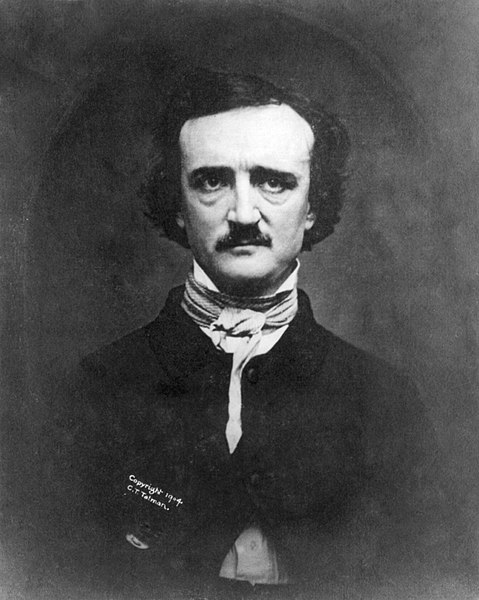
"Poetry is the rhythmical creation of beauty in words." ~  Edgar Allan Poe

April is National Poetry Month.

The Academy of American Poets introduced the first National Poetry Month in April of 1996 as a way to increase awareness and appreciation of poetry in the United States. Since then, the celebration of poetry has grown and now includes both Canada and Great Britain. Each year, publishers, booksellers, educators, literary organizations and bloggers (like me) use April to promote poetry.

Organizers encourage writing a poem a day in celebration. Though many schools incorporate this into their lesson plans and some individuals are even brave enough to do it, I'll not be quite so ambitious. Do expect at least a few poems from me (good or bad) sometime in April. Nothing on the scale of the Winter, Spring, Summer and Autumn Seasonal Sonnet Series from a few years back because frankly I'm not quite sure where that inspiration came from (I couldn't even write a sonnet for an college assignment). But something interesting and poetic is sure to arise at some point.

You don't have to be a poet to enjoy what the month has to offer. Check out 30 Ways to Celebrate National Poetry Month. People who would like to be on the receiving end of a Poem a Day can sign up for the e-mail list at Poets.org. Poem Flow for iPhones, available through the iTunes store, features daily poems presented as both fixed and animated text. The truly poetic at heart can even search the National Map for events happening near them this month.

On a related note, there is still time for St. Paul residents to submit entries to have their poems published on city sidewalks. The Fourth Annual Saint Paul Sidewalk Poetry Contest ends April 17 at midnight.

My other previous attempts at poetry, for better or worse and some of which I had forgotten I'd even written:

Forgotten Roses
Under Your Skin
Into the Darkness
In Memory of Ian Talty
Summer on the Prairie

Don't forget my ever-present Haiku News Series.