Showing posts with label Language. Show all posts

Friday, December 2, 2011

Language vs. Math

After reading Life's Extremes: Math vs. Language from LiveScience, it sort of made me wish I'd taken the SAT test. The article states:
Most people would agree they are better at verbal or math subjects in school, as grades usually do attest. Highly intelligent individuals often do well in both subjects... while less intelligent people can struggle. But a minority of us excels in the language department and bombs at mathematics, or vice versa.
The article also included the graphic below:


It then goes on to talk about various types of disorders that can effect reading or math comprehension, like dyslexia or discalcula. What it failed to do was address the major differences in the numbers above.

Of 1.5  million SAT test-takers in 2010:
  • 154 students scored between 700-800* in math, while scoring 200-300 in critical reading.
  • 5 students scored between 700-800* in critical reading, while scoring 200-300 in math.
      *Out of a possible 800

That's a big difference in people who excel at math vs. language. The only explanation the article offers, brief and incomprehensive as it is, is that different parts of the brain are used for different functions. That doesn't explain anything!

I took the ACT, so I can't compare my score. I think I would have fallen into the reading comprehension category displayed to the left. My English score was a few points shy of perfect and my math score just barely squeaked by for the lowest range of average.

But why? Math is just another form of language and communication. And it should be easier, because there can't really be a double-meaning to numbers in the same way words can have different definitions.

The closest this article came to giving a real answer was:
Of course, environment and experience play a major role...Parents who have a lot of books around the house might encourage a child to get more into reading and writing, whereas math games promote doing sums instead.
My mom has always been a bookworm and I was reading some pretty complicated materials at a fairly young age.But I didn't try to learn to be advanced at reading comprehension, it just came to me naturally. At the same time I tried desperately to learn to be better at math.

Nothing really helped. Contrary to what the article says is the key to mastery, practice did not make perfect. Sometimes I think I'm lucky I can balance my checkbook. I can tell you how to rearrange a sentence so it doesn't end with a preposition without a second thought, but it takes serious concentration to multiply two single-digit numbers.

After searching,  I couldn't find an answer as to why so few people excel at reading comprehension and suck at math compared to how many people are math-knowledge-rich and reading-ability-poor. But I did empathize with this story about Language People vs. Math People. Similar types of verbal scenarios have happened in my life!

If someone reading this knows the reason, kindly leave a link to the answer in the comments below. I am incredibly curious to know.

Monday, November 14, 2011

Morse Code: A Dying Language?

S.O.S. in Morse Code
Extinct and threatened languages are discussed often in this blog. Usually, the culprit causing their disappearance is the advancement and expansion of more dominant languages, leading to the isolation and reduction of people who speak unique, rare tongues.

In cases where attempts are made to rescue dying language, technology such as computers and audio recordings are the tools being used to help turn the tide. When it comes to Morse Code, though, advancements in technology and audio broadcasting/recording are leading to its death.

Morse Code is a method of transmitting text data as a series of tones, lights, or clicks that can be understood by a skilled listener or observer. The International Morse Code encodes the alphabet, numbers and punctuation as standardized sequences of signals called "dots" and "dashes". It was developed in the first half of the 19th century and was used extensively during the first half of the 20th century, particularly for communication with the front lines during World War II.

Now, with smart phones, satellite technology, the internet and texting, the Morse Code language has become obsolete. Until a few years ago, it was mandatory for people taking amateur shortwave radio exams to know, but that section has been removed from the test. The Coast Guard stopped seeking and translating Morse Code distress messages in the late 1990s.

The slow death of Morse Code was partly the inspiration for George Campbell to record memories of his life as a landline commercial operator in a book entitled "Good Night Old Man." He was only 19 years old in 1945 when he passed on the coded message that Germany had surrendered. His aim with the book was to bring awareness of the language to younger generations, who no longer have need to learn it.

Though some might argue that Morse Code shouldn't be counted out yet, technology continues to rush forward. The LOLs and emoticons of texting are drowning out the dits and dahs of Morse Code. It is probably the only language quietly slipping into extinction that the world won't someday miss (but certainly don’t quote me on that).

[Update: The book "Good Night Old Man" can be purchased through Dream Write Publishing.]

Friday, September 23, 2011

Language Barrier: Finger Lickin' Good

In the first installment of Language Barrier (longer ago than I care to admit), the original "Got Milk?" ad campaign was discussed, along with its nearly catastrophic translation into Spanish. The recent update to the campaign and the controversy it started inspired me (reminded me) there were cases of brand translation issues that hadn't yet been explored. At least at this blog.

When products make the trip to new markets overseas, new advertising campaigns in the local language must be crafted for them. Often, a company will simply take the concepts and tag lines of an existing campaign and translate them directly, sometimes without consulting resources that might have helpful cultural knowledge. This can lead to some very interesting interpretations from one language to another.

Kentucky Fried Chicken, now known as KFC, learned that the hard way when it first entered the Chinese market in the 1980s. "Finger Lickin' Good," its slogan since the 1950s, was mistranslated into Mandarin as "Eat Your Fingers Off." Though the chicken is quite tasty, that's probably not the right message to send in any language.

Making a gaffe like this could have doomed a brand, but in this case it was because KFC was new and relatively unknown in China at the time that it was able to recover. After the clumsy translation was fixed, Chinese citizens who were curious about all things from the West snapped up buckets of KFC chicken and licked their fingers. Today it is the most popular Western fast food in China, with the largest KFC market outside the U.S. at more than 1,200 franchises.

Supplemental: After more than 50 years of “Finger Lickin’ Good” as a tag line, KFC decided earlier this year to change one of the most successful slogans in advertising.  As part of its attempt to establish a healthier image, it was changed to simply “So Good.” The rebranding coincided with the introduction of healthier frying oils and meals cooked on a griddle or baked instead of fried. There are also plans to show the calorie content of all items on KFC’s menus starting this September, though at the time of this post there doesn't seem to be any evidence of that having happened yet.

Sara Duane is a freelance writer in the Twin Cities area of the great state of Minnesota.   

Friday, March 11, 2011

10 Most Endangered Languages in the World

I have been meaning to post this for a while. Someone sent me an article exploring the 10 Most Endangered Languages in the World to me knowing that I'd find it interesting.

We tend take languages like English, German, French, Spanish and Mandarin for granted. Because they are so widely spoken, we expect them to be around forever. Provided humanity doesn't manage to kill itself in the next few decades, that may not be the case in the future. Dialects rise and fall just as civilizations do.

Many languages that currently exist were at one time spoken by many, but are alive today only because a single speaker is still breathing. Often, that lone speaker is geriatric. Sometimes, they are suffering from dementia. Ethnographers and linguistics experts calculate that at least one language slips into silent extinction every two weeks.

Here are three of the 10 Most Endangered Languages in the World:
Apiaca: Also referred to as Apiaka, Apiake, and Apiaca, these Brazilian peoples find their language and way of life threatened by the gradual creep of Portuguese into the Mato Grosso region. Considered a subgroup of Tupi (specifically Tupi-Guarani), the language only appears to have one remaining speaker in 2007. This in spite of an ethnic population hovering around 192 people.

Kaixana: The last known individual to boast Kaixana as his primary language was Raimundo Avelino. He was 78 as of 2008, living in the Limoeiro, Amazonas, Brazil, and seems to still be kicking around as of February 2011. As far as ethnographers and linguists know, he is the last of the Kaixana speakers.

Kulon-Pazeh: Various Sinitic dialects popularly spoken in Taiwan endangered Kulon-Pazeh (also known as Kulun) to the point it went officially extinct after the 2010 death of Pan Jin-yu. She worked fiercely to educate her peoples in their native tongue, so it continues to hobble along as a second language rather than a primary. However, the overall outlook remains grim, especially considering its status as a "home language" since the 1930s.
Read the rest of the 10 Most Endangered Languages in the World at Online Colleges.

Monday, February 21, 2011

Origins of International Mother Language Day

February 21 is International Mother Language Day. The observance is held annually worldwide to promote awareness of linguistic and cultural diversity and multilingualism. Though the first worldwide inception was proclaimed by the General Conference of the United Nations Educational, Scientific and Cultural Organization (UNESCO) in November 1999, its history runs deeper and darker than its current state of celebration might indicate.

International Mother Language Day exists because of a battle over the right to speak a language. It originated as Language Movement Day, which has been commemorated in Bangladesh (formerly East Pakistan) since 1952. During that year, a number of University of Dhaka students were killed by the Pakistani police and military during Bengali Language Movement protests.

The events that led up to that day started on 21 March, 1948, when the Governor General of Pakistan, Mohammed Ali Jinnah, declared Urdu as the only official language for both West and East Pakistan. The mainly Bengali-speaking people of East Pakistan (which is now Bangladesh) protested against it, starting the Bengali Language Movement. On 21 February, 1952, students in the present day capital city of Dhaka called for a provincial strike. The government declared a limited curfew to try and prevent this. Though the protests were tame and the students unarmed, the Pakistani police fired on them anyway, killing at least four. Four more were killed the following day.

The first anniversary on 21 February, 1953, was observed in the country as Martyrs' Day. More than 100,000 people assembled at a public meeting held in Armanitola in Dhaka. West Pakistani politicians exacerbated the situation by declaring anyone who wanted Bengali to become an official language to be an "enemy of the state." February 21st 1954 and 1955 were equally tense and as the movement spread through East Pakistan, the whole province came to a standstill.

The first peaceful observance of Language Movement Day was in 1956. The government had relented during the previous year. On 29 February 1956, Bengali was officially recognized as the second language of Pakistan. The country's constitution was reworded to say "The state language of Pakistan shall be Urdu and Bengali." Language Movement Day is thought to have been the start for the independence movement, which eventually resulted in the liberation of Bangladesh in 1971.

The observance spread beyond the young nation. International Mother Language Day has been observed worldwide every year since February 21, 2000. The United Nations General Assembly proclaimed 2008 as the International Year of Languages, to promote unity in diversity and international understanding through multilingualism and multiculturalism. On 16 May, 2009, the General Assembly called upon Member States "to promote the preservation and protection of all languages used by peoples of the world".

Languages are the most powerful instruments of preserving and developing heritage and history that can date back thousands of years. Every action to promote the dissemination of mother tongues encourages linguistic diversity and multilingual education. Their study also helps to develop fuller awareness of linguistic and cultural traditions throughout the world, inspiring solidarity based on understanding, tolerance and dialogue.

Tuesday, November 30, 2010

"Oh, the Profanity!"

The Parents Television Council is sounding the alarm on an increase in profanity on television. In a report aptly named "Habitat for Profanity," the watchdog group alleges that foul language on network TV has increased 69% from five years ago. Are they kidding, is that the real number?! Not 68% or 70%?

The PTC spent the first two weeks of the fall TV season counting dirty words in prime time. The group monitored ABC, NBC, CBS, Fox, UPN, and the WB in 2005; the Big Four plus the CW in 2010. 124 hours of programming from 2005 was compared to 128 hours in 2010.

The Parents Television Council monitored 18 terms it considers indecent. According to federal law, content can be considered indecent if it describes or depicts “sexual or excretory organs or activities… [and] the broadcast must be patently offensive as measured by contemporary community standards for the broadcast medium.” A full list of the terms they encountered and how often they were repeated can be found here.

PTC reports that the most popular curse word on TV was a bleeped F-word. The group found 156 instances of it, compared to just once in 2005. The word "hell" is next with 119 instances. The least used profane words were "douche" and "balls," each tied at one.

The group said the biggest increase of foul language occurred during the 8 p.m. and 9 p.m. time slots. During the 8:00 pm "family hour", instances of the f-word increased from 10 in 2005 to 111 in 2010. Use of the s-word during this hour increased from 11 instances in 2005 to 42 in 2010.

Why such a drastic increase? It has been attributed to a court ruling against profanity censures by the Federal Communications Commission. As Television Broadcast explains:
The Second Circuit ruled in July that the FCC’s penalties for fleeting expletives were “unconstitutionally vague.” The case evolved out of a 2004 FCC indecency dragnet resulting in $4.5 million in fines. Fox was cited for expletives uttered during live awards telecasts in 2002 and 2003, though a similar previous occurrence was given a pass. Fox challenged the ruling. The Supreme Court agreed that the FCC's fleeting expletive rules were vague and tossed a First Amendment challenge back to the lower court.
In response, the networks instituted tape delays to bleep fleeting expletives or cut away from indecent material during live shows. That nixes most of the PTC's complaints. However, the group is increasingly opposed to scripted programming such as Fox’s “Family Guy,” the title of CBS’s “$#*! My Dad Says,” and “Two and a Half Men.”

Personally, I'm not opposed to profanity or "offensive content," I just find this subject to be particularly interesting as an avid fan of classic film and television. Every fart, boob, and penis joke reminds me of just how far censorship on American television has come since shows first began broadcasting in the 1940s and 1950s. Back then, Lucille Ball wasn't allowed to say she was "pregnant" on "I Love Lucy," she had to use the word "expecting." The first Tweety Bird, a featherless pink baby bird, was considered to be too naked and to satisfy the censors the animator was forced to add the distinctive yellow colored feathers we know him by today. Oh my, how times have changed!

Historically, edgy shows that push the envelope like those listed above have been popular with audiences. The predecessors of today's show's owe some of their freedom to groundbreaking sitcoms such as "All in the Family," "The Jeffersons," "Three's Company," "Married... with Children," and "Roseanne." Is it a coincidence that some of the biggest sitcom hits on television right now are also some of the most "profane"?

Thursday, November 25, 2010

Painting Lyrics in the Air with His Hands

I've made my feelings known about hip-hop and rap before - I'm highly selective and skeptical of newcomers. You have no idea how excited I was to find this video newscast about Signmark, the deaf man who paints lyrics in the air by waving his hands.

Though he expresses himself through an art form rooted in the spoken word, Signmark doesn't make a sound. Instead, he signs his way through songs as fellow rapper Brandon gives voice to his lyrics. Together, the artists bridge the gap between the deaf world and the hearing world.

For the curious, though Signmark can't hear the music, he can feel the beat. "You can go to a concert with earplugs and you'll feel it, you'll then notice that you feel it in your body," said Signmark. As the music plays, he signs and Brandon raps in unison. The combination is a whole new kind of performance art.

"Those two words, music and deaf, they've never gone together," signed Signmark. Maybe not, but they do now: In 2009, Signmark became the first deaf rapper ever to land a recording contract.

And the music is infectious. I found three videos of his online. My personal favorite is "Smells Like Victory" but honestly they're all good. I highly recommend taking a look and a listen!

Signmark - Smells Like Victory

Signmark - Against the Wall

Signmark - Speakerbox

Sunday, October 31, 2010

Ojibwe: An Endangered Minnesota Language

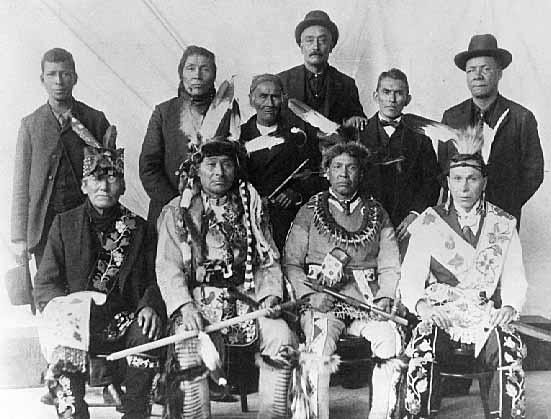
The Ojibwe language, spoken by the Ojibwe or Chippewa people, is one of the world's imperiled languages. It is also one of the early native tongues spoken within the territory now known as Minnesota. And this Monday, a documentary about the steps taken within the state to revitalize this dying language will debut on TPT 2.

Leech Lake Ojibwe Delegation to Washington 1899
Dr. Anton Treuer, a professor of Ojibwe at Bemidji State University, is not a native Ojibwe speaker, having studied and learned the language as an adult. But now he has dedicated his work to interviewing the last remaining "first speakers" or "functional speakers" - those for whom Ojibwe is their first language. It is estimated that there are fewer than a thousand of these fluent Ojibwe speakers left in the United States and most of them are older than age 70.

One of the main reasons that indigenous languages like Ojibwe have nearly disappeared throughout North America is due to early policies within the United States to assimilate Native Americans. After taking their lands, the government banned the practice of native traditional religious practices and established "English only" boarding schools which children were required to attend. The native languages that once echoed across the United States were being systematically scrubbed from the cultural landscape.

Chippewa baby at a Minnesota rice farm, 1940
Produced and edited by John Whitehead, "First Speakers: Restoring the Ojibwe Language," is a film that documents the rescue and revitalization of the Ojibwe language that is taking place in Minnesota. The film follows Treuer, and others like him, who are driving the Ojibwe language resurgence. Many of them studied the language at the University of Minnesota, Bemidji State University, and with tribal elders. They are working to undo some of the damage done to their culture by establishing Ojibwe language immersion charter schools. Some already exist in the state at in Leech Lake and in Minneapolis.

Through this model, it is hoped that a new generation of "first speakers" will be established, children for whom Ojibwe is a primary language. Then the language, and the culture, may not be lost and stand a chance of surviving, to be passed on to the next generation.

"First Speakers: Restoring the Ojibwe Language" is a production of Twin Cities Public Television and will debut on November 1 at 8 p.m. on TPT 2.

Additionally, Dr. Anton Treuer’s book “Ojibwe in Minnesota” was recently named as the “Best Read in Minnesota 2010” by The Center for the Book in the Library of Congress. Part of the “The People of Minnesota” book series, “Ojibwe in Minnesota” is just 122 pages, but is intended to help people understanding the complicated history of the Ojibwe people – their language, culture, economics and legalities.

[This article has been updated to include corrected information. Though Dr. Treuer is a main subject of the film, he did not produce it. It was produced and edited by John Whitehead. Thank you, John, for your comment!]

Thursday, July 15, 2010

The Missing Language Link

A missing link in language history has been found. Its discovery connects one extremely endangered ancient language spoken only in Siberia with several other rare languages of Native North Americans. This knowledge may potentially rewrite human history.

The language of Canada's Dene Nation, along with the Navajo and Apache in the United States and many other "Athabaskan" dialects, have origins in the Ket language - an ancient and highly endangered language spoken by only a few people in Western Siberia. Initially written about two years ago by Edward Vajda, a linguistics professor at Western Washington University, the landmark discovery represents the only known link between any Old World language and the hundreds of speech systems among first nations in North America.
The new collection of articles by Vajda and more than a dozen other experts from the U.S., Canada and Europe details a multitude of clear connections -- nouns, verbs and key grammatical structures -- between the archaic language spoken by the Ket people of Russia's Yenisei River region and dozens of languages used by North American aboriginal groups, primarily in Alaska, Northern and Western Canada and the U.S. Southwest.

University of Alaska linguist James Kari says the discovery could rewrite the story of when, where and how ancient Asian migrants arrived in North America. It should also push research into new directions across disciplines beyond linguistics, including archeology, anthropology, paleoecology, biology and genetics.

The Bering land bridge joined present-day Alaska and eastern Siberia at various times during the most recent ice ages. It is believed that a small human population survived the ice age in this region, called Beringia. Isolated from its ancestor populations in Asia, they expanded to populate the Americas sometime after 16,500 years ago, when the last glaciers blocking the way southward melted.

Researchers suggest that the Bering land bridge migration occurred 12,000 years ago and that every Native American is descended from those Eastern Siberians who migrated across the land bridge. This has been backed up by a unique genetic variant widespread in natives across both continents. Now it has also been backed up with language.

So, how was the link discovered? Vajda found that the few remaining Ket speakers in Russia and the native speakers in North America used almost identical words for canoe. They also used similar words for such component parts as prow and cross-piece. That combination, he thought, was beyond the realm of chance. It was the beginning of a linguistic journey that brought together communities separated by an ocean and more than 10,000 years of history.

Representatives of some North American nations believed to share a root language with the Ket traveled to Moscow in April to visit their new-found linguistic kin. The connection between the Ket and Athabaskan peoples could be hugely important. Arctic Athabaskan Council spokesman Danny Creswell said "Upon this base we can build cultural, economic and perhaps political links."

Thursday, July 1, 2010

Language Police to Halt Murder of English Language

Watch out, the Queen's English Society is going to make a run at being the language police!

The Queen's English Society will form an Academy of English to protect the language from the "impurities, bastardisations and the horrors introduced by the text-speak generation." France has L’Academie Francaise, Spain has the Real Academia Espanola, and Italy is home to the Accademia della Crusca, which all uphold the rules of their respective languages. English has no such defense against verbal corruption. English continuously morphs.

Members of the Queen’s English Society, made up of professionals, academics and other linguists, hope to win official recognition, or even a Royal Charter for their academy.

Though I'm not convinced that such an academy could really slow the evolution of the English language, I am curious to see how they attempt it.

Wednesday, June 16, 2010

Your Oxford English Dictionary May Contain an Error

An Australian physicist recently discovered a 99-year-old typo. In a dictionary. That has been used as a reference for other dictionaries.

Dr. Stephen Hughes, from the University of Technology in Brisbane, discovered the mistake while researching an article for science teachers. He brought to the attention of Oxford University Press that the definition for the word “siphon” was incorrect. Oxford's definition states siphons function due to atmospheric pressure, but Hughes says in actuality, they function due to gravity. The definition had been incorrectly repeated since it was first published in 1911.

OED will make the change in the next edition, but it is unknown how many other sources used Oxford's definition as a resource.

I'm a nerd. I would have loved to have been the person to find this typo. But even if I had read it, I'm not a scientist so I probably wouldn't have even known it was incorrect.

Thursday, April 15, 2010

Text-Slang Creeping Into Academic Work

Thanks to text messaging, writing as an activity has increased,  in a manner of thinking. Unfortunately, quality writing has steadily decreased - which can also be attributed to texting.

Text speak, with it's own version of shorthand and slang, may be appropriate for a quick message to a friend, but it is completely inappropriate for school work and assignments. However, texting language has been seeping into academic work, leaving college professors simultaneously perplexed and exasperated.
"Despite the fact that I happen to be perfectly capable of reading any incoherent drivel you may send to my (e-mail) inbox directly from your phone keypad, 'wut up ya I cnt make it 2 clss lol' is insanely unprofessional," reads the syllabus of Alejo Enriquez, a Cal State East Bay instructor.

"Therefore, I am imposing a higher standard of grammar, spelling, and use of the enter key upon you and kindly request that all e-mails sent to me resemble any other letter to your teacher, supervisor, grandparents or parole officer."
Young adults and teens are constantly communicating via text messaging, more-so than older adults. According to a 2008 survey by the Pew Internet & American Life Project, two-thirds of middle- and high-school students have accidentally used instant-messaging-style words in their work, while a quarter admitted using emoticons in assignments. Switching back and forth between the informal communication with friends and formal communication with teachers and professors is proving difficult for some.

Text-speak isn't just invading homework and papers. The flippant mode of communication appears in e-mail correspondences from student to professor. A word to the college-bound: Professors didn't go through years and years of school and get that nifty PhD so you can address them as "Yo teach!" They are there to help you learn, addressing them respectfully will get you a lot further in their classes.

College always has been a place for students to learn how to communicate appropriately. After all, the education is supposed to prepare them for their future careers. Teaching students to ditch the tech-speak in formal, working situations is just the latest step in that education.

Personally, I just can't bring myself to use text shorthand in any situation. I spell out nearly every word when I'm texting, which isn't often. And when I get texts with lots of abbreviations, I swear it takes me twice as long to figure out what it says than if the person had just entered the extra letters to complete the word. I fully support ditching text-slang.

Thursday, April 8, 2010

Laughter: The Most Primitive Language

Laughter is universal. It sounds basically the same across humanity, with no discernible distinctions as a result of differences in language or culture.

Laughter is primal. No one teaches another how to laugh, yet humans somehow just know how to do it, even before learning to speak. Other primates, dogs, hyenas, even rats have been known to laugh.

Laughter is social. Humans especially like to laugh with family and friends.

Laughter is infectious - sometimes just hearing other people laugh can inspire a chuckle or giggle. And how often have you experienced something hilarious when you were alone and you just couldn't wait to tell someone?

Laughter is unique. So it should come as no surprise that scientists and researchers take laughter quite seriously.

Over decades of research, neuroscientist Robert Provine, a professor with the University of Maryland Baltimore County, has boiled laughter down to its basics.
"All language groups laugh 'ha-ha-ha' basically the same way," he said. "Whether you speak Mandarin, French or English, everyone will understand laughter. ... There's a pattern generator in our brain that produces this sound."

Each "ha" is about one-15th of a second, repeated every fifth of a second, he said. Laugh faster or slower than that and it sounds more like panting or something else.
Provine also says that laughter is mostly about social responses rather than reaction to a joke. Some studies suggest that only 10%-20% of laughter is generated by anything resembling a joke. The other 80%-90% are in reaction to dull non-witticisms that aren't meant to be funny. Some people even laugh at inappropriate times when they don't mean to.
"Laughter isn't under our conscious control," says Provine. "We don't choose to laugh in the same way that we choose to speak."
Unlike speech, laughter isn't completely a form of self-expression. One function of laughter may be to trigger positive feelings in other people. When you laugh, the people around you might start laughing in response. After some time and some chuckles, a whole group of people can become cheerful and relaxed. Laughter can ease tension and foster a sense of unity. This would have been very important for small groups of early humans.
"Laughter above all else is a social thing," Provine said. "The requirement for laughter is another person."
Studies of laughter in rats could help further the study of laughing humans. How does one make a rat laugh? It turns out rats love to be tickled. They return again and again to the hands of researchers tickling them. How cute is that?


Northwestern University biomedical engineering professor Jeffrey Burgdorf has found that laughter in rats produces an insulin-like growth factor chemical that acts as an antidepressant and anxiety-reducer. The same thing probably happens in humans, too. This would give doctors a new chemical target in the brain in their effort to develop drugs that fight depression and anxiety in people.

While studying laughter is serious work to researchers, it sounds silly when they're seeking research grants. For that reason, Northwestern's Burgdorf avoids the word "laughter." He calls it "positive emotional response."

Sara Duane is a freelance writer in the Twin Cities area of the great state of Minnesota.   

Thursday, March 25, 2010

The Simpsons Contributions to the English Language

A poll that explores the contributions of "The Simpsons" to the English language? This is a study of words I can get behind!

Today Translations, a London-based translation company with a network of 2,600 linguists in over 60 countries, polled 320 of its linguists across the world to try to find the “most valuable addition to the English language” from the world’s most popular animated TV series, "The Simpsons". Is it any surprise that the top word was "D'oh!" - Homer’s trademark grunt of irritation or frustration?

“D’oh!” scored 37% in the poll, followed by “introubulate” (“to get someone into trouble”) and “craptacular” (spectacularly crap). “Eat my shorts" (the equivalent of "Kiss my a**") came fourth. The phrase “cheeseeating surrender monkeys,” used to describe the French, came in ninth.

The Homerish "d'oh!" was entered into the Oxford English Dictionary in 2001 with this definition:

Doh: \ˈdō\
Variant(s): d'oh or dooh
Function: interjection

: Expressing frustration at the realization that things have turned out badly or not as planned, or that one has just said or done something foolish. Also (usu. mildly derogatory): implying that another person has said or done something foolish

Other notable Homerisms range from “lupper” (a large meal midway between lunch and supper) to “sacrilicious” (meaning either deliciously sacreligious or the delicious taste of eating something sacred).
"Homer Simpson must be the most influential wordsmith since Shakespeare,” says Jurga Zilinskiene, CEO of Today Translations. “And thanks to The Simpsons, combined with the power of the internet, ours must be the greatest golden age for new words since Shakespeare’s own.”

A rival to Homer's contributions could be his son, Bart Simpson. In addition to "Eat my shorts" and “craptacular”, he coined the word “yoink” (to snatch by grasping hastily or by yanking) and who could forget “kwyjibo”, which he defined during a Scrabble game as “a big dumb balding Northern American ape with no chin” - otherwise known as Homer Simpson. Bart shares credit with his sister Lisa for the word, “Meh” - defined as an expression of profound indifference, much like how the word “whatever” is used by shrugging teenagers.

The Simpsons has been dubbed into over a dozen languages, including French, German, Spanish, Portuguese, Japanese and Arabic.
“Translating The Simpsons into other languages can be a challenge”, says Jurga Zilinskiene of Today Translations.

In fact, in the French version of the show Homer actually says “T’oh!”, instead of “D’oh!” because the French actor who dubs Homer’s voice misread the word the first time he played the role. He has never got round to correcting it.
French translators have also had difficulties with another famous Simpsonism: “cheese-eating surrender monkeys”, a phrase first used in the show, says Ben Macintyre, back in 1995 by Willie, the Scottish school janitor, to describe the French. “In the French version of the show it is translated as ‘singes mangeurs de fromage. The word ‘surrender’, intriguingly, is not translated.”

D'oh! The French didn't like that phrase? Meh. The rest of the words, and their definitions, are as follows:
  1. d'oh! - (interjection. A grunt expressing frustration at the realisation that things have turned out badly or not as planned or that one has just said or done something foolish.)
  2.  introubulate (verb. To get someone into trouble.)
  3. craptacular (adjective. A portmanteau of "spectacular" and "crap" i.e. spectacularly crap)
  4. eat my shorts (interjection: An insult or dismissal in the same vein as "Kiss my a**").
  5. knowitallism (noun. A word that describes Lisa Simpson's personality.).
  6. embiggen (verb. Enlarge or empower)
  7. meh (Interjection. An expression of profound indifference).
  8. learning juice (noun. Beer)
  9. cheese-eating surrender monkeys (noun. An unflattering description of the French as a nationality.)
  10. kwyjibo (noun. Originally, a word that enabled Bart Simpson to use all his letters in Scrabble. When challenged, he claimed that it was the name of "a big dumb balding Northern American ape with no chin.")
Honorable Mentions:
  • banjologist (noun. An expert in banjo-based music)
  • cromulent (adjective. "valid" or "acceptable")
  • car-hold (noun. a garage)
  • malparkage (noun. the state or condition of being illegally parked)
  • yoink (verb. To snatch in a yanking-like fashion; also, to inflict a "wedgie" on someone by pulling or "yoinking" their underpants up sharply from behind, so as to wedge them uncomfortably between their buttocks)

Thursday, March 4, 2010

National Grammar Day

National Grammar Day is being celebrated today, March 4, 2010. It's a great day to review the subject of grammar, especially for writers!

There are many articles out there right now to celebrate the day, including 5 Easy Ways to Learn Grammar With The New York Times, National Grammar Day: E.B. White and Dr. Seuss would be proud, and National Grammar Day 2010: Resources And The WORST Grammar Mistakes Ever (PHOTOS). Additionally, the National Grammar Day website offers their Top 5 grammar tips:
  1. Affect Versus Effect
  2. Who Versus Whom
  3. Lay Versus Lie
  4. Ending a Sentence With a Preposition
  5. "Between" Versus "Among"
For once, I don’t have a lot to add! But I would like to take the Huffington Post’s advice and enjoy some School House Rock.

Conjunction Junction

A Noun is a Person, Place or Thing

Verb

Preposition

Interjections!

Lolly Lolly Lolly Get Your Adverbs Here

Sunday, February 21, 2010

International Mother Language Day Highlights Endangered Languages

Today, February 21, is International Mother Language Day. This day has been observed annually since its inception by UNESCO in February 2000 to promote linguistic and cultural diversity and multilingualism. It is the perfect day to highlight the plight of dying languages throughout the world.

Every 14 days, one of the world's estimated 7,000 spoken languages dies.

Nearly 80% of the world's population speaks just 83 languages. The proportion of people that speak those 83 languages grows everyday due to globalization and urbanization. In contrast, of the 7,000 oral languages that exist, more than 50% are spoken by only 0.2% of all the people on earth.

Over the centuries, obscure dialects from isolated communities all over the world have come and gone, dispersed for reasons as variable as the cultures. Empire-building and conquest of new lands is responsible for the deaths of language on every continent as powerful military, political, and religious forces decimated indigenous cultures. Advancements in agriculture sent entire populations of rural folks to urban centers in order to pursue a livelihood and feed their families, shedding their dialects for the popular nomenclature. Natural disasters like the 2004 tsunami and the 2010 earthquake in Haiti are just two examples of what types of catastrophe can dilute language and culture: After the recovery, no matter how well cities rebuild, communities will never be the same.

When populations migrate, the people all-too-often trade their own language for the dominant language of the region: For economic reasons, for social reasons, for educational reasons. This is how languages die. This is how history is lost. This is how vital cultural identities disappear.

The rate of loss has become critical, and now organizations all across the world are working feverishly toward saving the world's languages which are in danger of dying. The Foundation for Endangered Languages, American Association for Applied Linguistics, the Living Tongues Institute for Endangered Languages, and other groups are documenting and recording the languages most in danger of being lost. And boy do they have their work cut out for them. For example:
  • The Tirahi language of Afghanistan has only about 100 speakers left.
  • Lomavren, spoken in Armenia, had only 50 remaining speakers at last count.
  • With less than 200 speakers left, Ket can only be heard in a handful of villages in central Siberia.
  • There are 25 remaining speakers of Middle Chulym, or Os, a rare language also found in central Siberia.
  • The last speakers of Zoque, a language from Tabasco, Mexico, are two elderly men who refuse to speak to one another.
  • There are only about 200 remaining Sahaptin speakers, a dialect of the Native American Yakama Nation.

Some languages have enough speakers that a revival could happen, but other technicalities can hinder their progress. The Pirahã language, for example, has an estimated 250 to 380 speakers, but because it is not related to any other language, documenting it is incredibly complicated, if not impossible. It has no singular or plurals, no words for colors, and no words for numbers, meaning the Pirahã cannot be taught even the simplest math. It is also tonal – the word for "I" is distinguished from the word for "excrement" purely by the pitch of the speaker's delivery.

For other dying languages, there is hope. Speakers of the languages are helping researchers lead the way towards a revival.

88-year-old Virginia Beavert, one of the last Sahaptin speakers, has helped to co-write a translation dictionary for the language with University of Washington linguistics professor Sharon Hargus. The Ichishkiin Sinwit Yakama/Yakima Sahaptin Dictionary comes with a CD of Beavert pronouncing 9,830 Sahaptin words and phrases. It is hoped that the collaboration may inspire younger members of the Yakama Nation to learn the language.

There is only so much linguists can do to save these languages, though. Linguists can't personally maintain a language, all they can do is provide adequate documentation for it, like the translation dictionary with CD. It's up to the people to take it from there.
"The people themselves have to choose to maintain it. That requires a lot of effort, both in producing materials that will be suitable for schooling, for example, and a lot of personal effort that the people themselves require to make real the desire that they have to maintain their language," [says Dr. Gregory Anderson of the Living Tongues Institute for Endangered Languages].
What's more, there could be more than language at stake, here. Within ancient words could be answers to questions present-day humans have. Anvita Abbi, a professor of linguistics at Jawaharlal Nehru University in New Delhi, says the speech of hunter-gatherer societies carry an intimate, encoded understanding of the natural world and its biodiversity. Scientists have found small languages to be a veritable storehouses of local knowledge of medicinal plants and ecology. The bo language, which died with its oldest speaker Boa Sr in early February, had at least 67 words for varieties of birds and some 150 for fish. "There's a vast knowledge base slipping from our grasp," says Abbi.

With enough effort, disappearing dialects can flourish again. One of the great examples for the successful revival of a language in recent times is Welsh, the language of Wales in Great Britain. Just 20 years ago it was on the verge of extinction, but now it has hundreds of thousands of speakers. Welsh had one thing that most endangered languages do not: enthusiastic government support. Financial support from the government assured the revival of the Welsh language became a reality.

While money is important, it really will take action and cooperation between linguistic researchers and the speakers of these languages to save them. It would be a shame to lose the history and knowledge they contain. Ironically, though modern advancements have helped to contribute to the decimation of languages and culture, recording technology and the use of the internet to share knowledge could also help to preserve them.

Saturday, February 13, 2010

Floriography: The Language of Flowers

It's almost Valentine's Day. That means flowers! I know it's the day before, but odds are there are a few people putting it of to the last minute anyway. There may not be a lot of roses available, but you can still send a message with other types of flowers through the little-known practice of floriography.

The language of flowers, or floriography, was a Victorian-era means of communication in which various flowers and floral arrangements were used to send messages in code. This allowed people to express feelings which otherwise could not be spoken during this particularly frigid period of history. The arrangements were usually small bunches of flowers called tussie-mussies.

Floriography has roots in Persia and Turkey in the 1600s. At that time, the Turks used a simple language in which flowers replaced actual words. Arrangements of different flowers were used to convey a variety of messages.

The language of flowers later appeared in Europe in the 1700's. Seigneur Aubry de la Mottraye had learned of the flower language while living in exile in Turkey, describing it in his French memoir of 1727, which later became popular in England. It was also imported by Lady Mary Wortley Montagu, the wife of England's ambassador to Turkey. Shortly after her death in 1763, all her personal letters were published, which included an outline of Turkey's language of flowers.

In the early 1800s, the flower language had arrived in Paris. B. Delachenaye's Abecedaire de Flore ou langage des fleurs was first published in 1810. Charlotte de la Tour wrote Le Language des Fleurs in 1818. An English version was published in 1819. Flower Lore: The Teachings of Flowers, Historical, Legendary, Poetical and Symbolic was later written by Miss Carruthers of Inverness and published in England in 1879. This was the book that made it across the pond to America, allowing Victorian-era lovers to whisper sweet nothings with sweet peas.

The bit of floriography that everyone knows is that red roses imply romantic love, but most other meanings have fallen out of popular knowledge. Around Valentine's Day when I was in school, we had the chance to send carnations to people for $1 a piece - red carnations for love, pink carnations for friendship, and white carnations meant secret admirer. Close, but according to "real" floriography, pink means "a woman's love" and white means "disdain." Huh. Some other flowers and their meanings:

Red Tulip - Declaration of love
Yellow Tulip - Hopeless love
Lily of the Valley - Trustworthy
Daffodil - Uncertainty, chivalry, respect, or unrequited love
Daisy - Innocence, loyal love, purity, faith, cheer, simplicity
Hibiscus - Rare beauty, delicate beauty
White Roses - Eternal Love, Purity
Yellow Roses - Friendship
Red & Yellow Roses Together - Joy, Happiness, and Excitement
Red & White Roses Together - Unity
Thornless Rose - Love at First Sight

Not so happy messages:

Yellow Carnation - You have disappointed me; Rejection; disdain
Striped Carnation - Refusal
Morning glory - Love In Vain
Lobelia - Malevolence
Love lies bleeding - Hopelessness
Marigold - Pain and grief
Black Rose - Death, hatred, farewell
Hydrangea - Frigidness, Heartlessness

These are just a few. There are literally hundreds of flowers with hundreds of meanings.

Additionally, there is a whole set of etiquette that went with Victorian floriography. Handing over flowers with the right hand meant "yes", while with the left meant "no." For example, if a beau gave red roses to a young lady, she might reciprocate by plucking one and handing it back with her right to reciprocate, or send him away with a bud from her left. Flowers could also be inverted in arrangements, which represented the opposite of the flower's usual meaning. But thankfully the etiquette aspect of floriography has been lost to the ages.

Japan has its own version of floriography called Hanakotoba. I couldn't find much information on it, though. One source said the floral practice in the East was older than that in the West. Another source said Hakakotoba has only been around since World War II. That I find hard to believe, since ikebana - the Japanese art of flower arrangement - has existed for 500 years. Ikebana is a little different though. Contrary to the idea of floral arrangement as a collection of blooms, ikebana often emphasizes other areas of the plant, such as its stems and leaves, and draws emphasis toward shape, line, form.

Floriography is a complex language of love. Thankfully we're no longer in the Victorian era and we can pretty much say whatever they want whenever we want. But to this day, flowers and plants continue to be symbolic of other messages, as they likely will long into the future.

Sara Duane-Gladden is a freelance writer in the Twin Cities area of the great state of Minnesota.  

Saturday, February 6, 2010

The Death of Boa Sr and the Bo Language

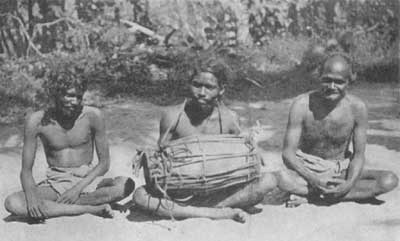
In 1992 a prominent US linguist predicted that by the year 2100, 90% of the world's languages would have ceased to exist. One of those languages died last month when 85-year-old Boa Sr passed away. She was the last speaker of Bo, which at 70,000 years was one of the world's oldest.

According to one count, there are about 470 languages throughout the world that are on their own version of an endangered species list. They are little-known, little-spoken languages on the verge of disappearing as more indigenous people integrate into modern society. Among that number are Lipan Apache with 2 known speakers in the US, Totoro with 4 known speakers in Colombia, and Bikya with just 1 speaker left in Cameroon.

With the death of Boa Sr, the oldest member of the Great Andamanese tribe, there is one less endangered language - it has now become extinct. The language spoken on one of India's Andaman Islands now ceases to be. Languages in the Andamans are thought to originate from Africa, with some estimated to be even 70,000 years old.

BBC radio has a short audio file of what the unique Bo language sounded like. CNN also has a audio of the Bo language with a video of pictures and some of the words translated.

Languages can be brough back from the brink, or even from total extinction, if the will is strong enough and most importantly, if enough of it has been written down.  Hebrew was a dead language at the beginning of the 19th century. It existed as a scholarly written language, but there was no way to know how the words were pronounced. Persistence and will from Israeli Jews brought the language back into everyday use. There has also been a revival of Welsh in the UK and Maori in New Zealand.

Friday, December 18, 2009

There is a National Museum of Language

Did you know there is a National Museum of Language? I didn't, and now I do. You do, too.
Since its inception, the museum has featured an exhibit tracing the roots of early alphabet languages, such as Arabic, Latin, Greek and Hebrew, as well as one featuring the Chinese and Japanese character-based languages. Interactive displays involve computers, writing and reading.
As a museum dedicated to teaching the history of the world's languages, it is the first of its kind in the United States. I guess it just opened in April of 2008 in College Park, Maryland. And it is already in danger of closing.
"We need money," said James McFadden, the museum's treasurer. "Visitors are impressed, but the problem is translating that interest into a membership."
Of course. Lots of little museum and educational gems like these are at risk of closing down thanks to our dismal economy. Hopefully all the hubub about the recession having ended will be accurate and there will be some visible turnaround soon.
The museum plans to add an exhibit in February that will focus on the differences between American and British language that arose around the War of 1812, as many Americans began spelling some words differently ("color" instead of "colour") and adopting American Indian terms, such as succotash, raccoon, moose and terrapin.
I'm curious, it sounds interesting, even if it only has a 16-by-24-foot exhibit hall. But I also thought the Smithsonian Postal Museum was intriguing. You be the judge!

Wednesday, September 23, 2009

Cursive Writing a Fading Skill

Cursive writing is apparently falling by the wayside. In schools, most "penmanship" classes have slowly been converted into typing classes over the years. In fact, in 2011 the writing test of the National Assessment of Educational Progress will require 8th and 11th graders to compose their answers on computers, with 4th graders following in 2019. And why not, since our society relies so heavily on forms on computers, technology, and instant messaging?

I, for one, won't miss it. I learned cursive writing and thought that it was named as such because it made me want to say words I wasn't allowed to. I couldn't make my letters look as nice as the writing of my classmates. And there was only so much practice I was willing to put into it on top of all the "real" homework I had. After a few years of trying to write in cursive and never being satisfied with the end result, I totally rebelled in 6th grade. From that point on and to this day, I write it printed, all-capital letters. My signature looks like it belongs to a doctor (my mother wishes!).

Apparently I'm not the only one who prefers printing. For the SAT's written essay portion, a 2007 report by the College Board found that just 15 percent of test-takers chose to write in cursive, while the others wrote in print. Most adults don't write in cursive, though many do employ a printing/cursive hybrid. And as technology continues to improve, there will be fewer and fewer reasons to write things out by hand.

It's doubtful, though, that cursive writing will disappear entirely. Cursive writing helps to teach children hand-eye coordination and fine muscle control. Keyboards and computers are still not available for every student in every classroom, meaning homework, school notes, and tests will be handwritten for years to come. And finally, no matter how reliant on texting and e-mailing we become, we will probably always jot down notes with paper and pen.