Showing posts with label Science. Show all posts

Thursday, May 19, 2011

Mother of All Mother Tongues

All the world’s 6,000 modern languages likely have origins in a single Mother Tongue spoken by early Africans about 50,000 to 70,000 years ago, a study suggests. The finding may help to explain how the first spoken language developed, dispersed among the population and helped to advanced to the evolutionary achievements of the human species.

The author of the study, Quentin Atkinson, is an evolutionary psychologist at the University of Auckland in New Zealand. He has found the first migrating populations that left Africa laid the foundation for all the world's cultures by taking a lone language with them when they left.
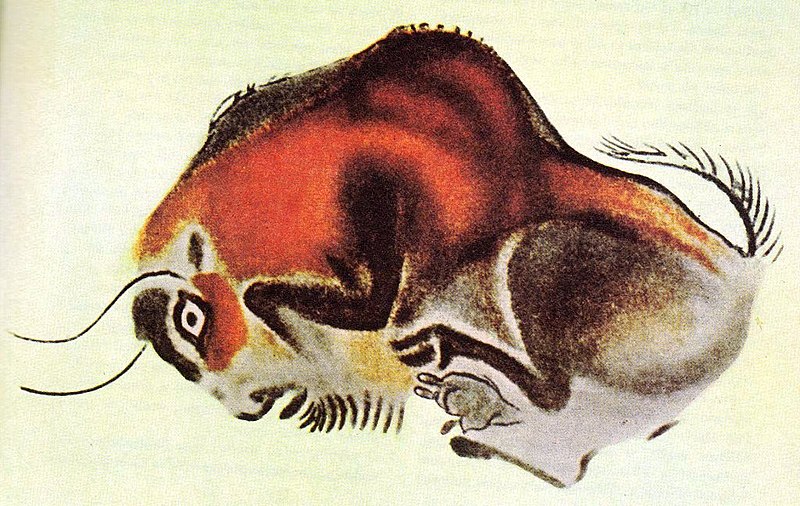
About 50,000 years ago (though the exact timeline is debated) there was an abrupt shift in how humans behaved. This is when they first began to generate cave art, bone artifacts and more complex hunting tools. Many experts contend that this creative burst was probably caused by the development of language, which not only enabled abstract thought but also its communication to other people. The good doctor's work supports this idea.
"[Language] was the catalyst that spurred the human expansion that we all are a product of," Dr. Atkinson said.

His research is based on phonemes, distinct units of sound such as vowels, consonants and tones, and an idea borrowed from population genetics known as "the founder effect." That principle holds that when a very small number of individuals break off from a larger population, there is a gradual loss of genetic variation and complexity in the breakaway group.
Dr. Atkinson figured that if a similar effect could be recognized in phonemes, it would support the idea that modern verbal communication originated in Africa and then expanded elsewhere.

After examining 504 worldwide languages, Dr. Atkinson found that dialects with the most phonemes are spoken in Africa, while those with the fewest phonemes are spoken in South America and on tropic islands in the Pacific.
The study also found that the pattern of phoneme usage globally mirrors the pattern of human genetic diversity, which also declined as modern humans set up colonies elsewhere. Today, areas such as sub-Saharan Africa that have hosted human life for millennia still use far more phonemes in their languages than more recently colonized regions do.

"It's a wonderful contribution and another piece of the mosaic" supporting the out-of-Africa hypothesis, said Ekkehard Wolff, professor emeritus of African Languages and Linguistics at the University of Leipzig in Germany, who read the paper.
These conclusions are compatible with the reigning thoughts on the origin of modern humans, known as the "out of Africa" hypothesis. Boosted by recent genetic evidence, this theory alleges that modern humans first emerged in Africa alone, about 200,000 years ago. Then, approximately 50,000 to 70,000 years ago (you'd think they'd be able to narrow that gap a little), a fraction of the population moved out and colonized the rest of the world. They became the ancestors of all non-African populations on earth.

When it comes to the origin of the earliest languages, it's a lot harder to determine. Truly ancient languages haven't left much evidence for scientists to study because languages weren't written down until thousands of years later.

Only humans have the capacity to communicate with this language based on different grammar rules and in written form. It enables us to share ideas with others and even pass them directly on to future generations. Without language, culture as we know it wouldn't exist, so it's not hard to understand why scientists want to know more about it.

Read more about Dr. Atkinson's study.

Sunday, May 15, 2011

"Um" and "Uh" Help Toddlers Learn New Words

I had a few teachers and professors who had trouble making it through a full sentence without sprinkling in a few too many "ums" and "uhs". Seems a bit ironic after reading about this new study.

A team of cognitive scientists at the University of Rochester's Baby Lab conducted a study which shows toddlers actually use their parents' fumbling (referred to technically as speech disfluencies) as a signal to help them learn language more effectively.
For instance, say you're walking through the zoo with your two-year-old and you are trying to teach him animal names. You point to the rhinoceros and say, "Look at the, uh, uh, rhinoceros." It turns out that as you are fumbling for the correct word, you are also sending your child a signal that you are about to teach him something new, so he should pay attention, according to the researchers.

Young kids have a lot of information to process while they listen to an adult speak, including many words that they have never heard before. If a child's brain waits until a new word is spoken and then tries to figure out what it means after the fact, it becomes a much more difficult task and the child is apt to miss what comes next, says Richard Aslin, a professor of brain and cognitive sciences at the University of Rochester and one of the study's authors.

"The more predictions a listener can make about what is being communicated, the more efficiently the listener can understand it," Aslin said.
Yet as a teenager and later as an adult attending class with a few teachers and professors who employed these "disfluencies" too often made it almost impossible to learn. In high school, it was funny and there was lots of giggling at the teacher's expense. In college, it was funny, too... at first. With one prof, we even kept a daily tally of how many of each he used. It would quite often get into the 600s for a one-hour class (For those of you keeping score, that is upwards of 10 per minute or one every six seconds).

So there I was in a class on which I spent my hard-earned money, so distracted by this man's inability to speak that I was counting his disfluencies. A lot of people could get past it, it was sheer torture for me. Needless to say, contrary to how it works when you're a toddler, "uhs" and "ums" are not conducive to learning when you're cognizant enough to know that's what you're sitting down to accomplish.

Anyways, in the study, the effect was only meaningful in children two years or older. When kids are between the ages of two and three, they usually are at a stage of development where they can create basic sentences of about two to four words. They also tend to have a vocabulary of a few hundred words. Younger children most likely haven't learned yet that disfluencies tend to precede new or unknown words.

Read more about how the study was conducted by Prof. Aslin, along with Celeste Kidd, a graduate student at the University of Rochester, and Katherine White, a former postdoctoral fellow at Rochester who is now at the University of Waterloo.

Monday, January 31, 2011

Prairie Dogs Use Language to Describe Predators

Humans aren't the only species to have sophisticated language systems. One of the most recent new languages discovered belongs to the humble prairie dog.

Prairie dogs, a rodent native to North America, are social creatures that live together in little underground communities. They are very social creatures that spend their days looking for food and chattering away with each other. When a predator enters their village, such as a dog, coyote or hawk, they call out to warn their neighbors with a distinctive "chee chee chee chee" sound.

When Professor Con Slobodchikoff of Northern Arizona University first started studying prairie dogs 30 years ago, he couldn't tell the difference between warning calls for different predators. However, the prairie dogs all responded to what appeared to be similar calls with different specific behaviors, like scurrying into their burrows for cover or standing up to get a better view. Slobodchikoff began to think there was something to the sounds that he wasn't hearing.

Slobodchikoff and his students recorded the noises from prairie dog villages whenever a human, dog, coyote or hawk passed. Then he used a computer program to analyze the recordings. The program measured the calls' frequencies and separated out the component tones and overtones.
What Slobodchikoff discovered was that the calls clustered into different groups, and each cluster had its own signature set of frequencies and tones. Prairie dogs, in other words, don't just have a call for "danger" — they have one call for "human," another for "hawk" and a third for "coyote." They can even differentiate between coyotes and domesticated dogs.
Even more astonishing, upon further analysis he discovered that prairie dogs appear to have methods of describing individuals within each type of predator. He had four volunteers walk through a prairie dog village dressed exactly the same except for their shirts. Each volunteer walked through the communities four times: once in a blue shirt, once in yellow, once in green and once in gray.
He found, to his delight, that the calls broke down into groups based on the color of the volunteer's shirt. "I was astounded," says Slobodchikoff. But what astounded him even more, was that further analysis revealed that the calls also clustered based on other characteristics, like the height of the human. "Essentially they were saying, 'Here comes the tall human in the blue,' versus, 'Here comes the short human in the yellow,' " says Slobodchikoff.
Slobodchikoff's experiments have been repeated with other groups of prairie dogs. His experiments offer insight into other highly social animals that may communicate with languages more sophisticated than we expect.

Source: New Language Discovered: Prairiedogese - NPR

 Sara Duane-Gladden is a freelance writer in the Twin Cities area of the great state of Minnesota.  

Wednesday, November 3, 2010

NELL: The Computer That Learns Like a Person

Few challenges in the computing world are bigger than understanding human language. The meanings of words and phrases relies on their context and the cumulative knowledge that humans learn over time. But researchers are now working on a machine that is trying to learn semantics just like a human does.

Utilizing a research supercomputing cluster provided by Yahoo, and supported by money from Google and the Defense Advanced Research Projects Agency, a team of researchers at Carnegie Mellon University in Pittsburgh has been improving the computer system called NELL - The Never-Ending Language Learning system. Housed in a basement at the university, NELL was "taught" some basic knowledge in a variety of categories, and then turned loose on the web with specific instructions to teach itself. By analyzing immense quantities of human-created text, NELL will begin to detect the patterns that define the use of language.

Calculating 24 hours a day, seven days a week, NELL scans hundreds of millions of Web pages for text patterns that it uses to learn facts. So far, it has learned 390,000, with an approximate accuracy of 87 percent. These facts are grouped into categories, such as cities, sports teams, actors, plants, animals, and 275 others and growing. The facts for each category are things like “Minneapolis is a city” and “Daffodil is a plant.”
NELL also learns facts that are relations between members of two categories. For example, Peyton Manning is a football player (category). The Indianapolis Colts is a football team (category). By scanning text patterns, NELL can infer with a high probability that Peyton Manning plays for the Indianapolis Colts — even if it has never read that Mr. Manning plays for the Colts. “Plays for” is a relation, and there are 280 kinds of relations. The number of categories and relations has more than doubled since earlier this year, and will steadily expand.
The learned facts are continuously added to NELL’s growing database, which the researchers call a “knowledge base.” A large pool of facts, like that conveniently provided by the internet, will help refine NELL’s learning algorithms so that it finds facts on the Web more accurately and more efficiently over time. Basically, just like humans, the more it knows, the easier it is to learn more in the future.

Though NELL is learning mostly by itself with astonishing accuracy, sometimes the NELL gets its facts wrong. Every two weeks, researchers scan the categories for inaccuracies. Sometimes they do have to step in and correct a misunderstanding.
When Dr. Mitchell scanned the “baked goods” category recently, he noticed a clear pattern. NELL was at first quite accurate, easily identifying all kinds of pies, breads, cakes and cookies as baked goods. But things went awry after NELL’s noun-phrase classifier decided “Internet cookies” was a baked good. (Its database related to baked goods or the Internet apparently lacked the knowledge to correct the mistake.)

NELL had read the sentence “I deleted my Internet cookies.” So when it read “I deleted my files,” it decided “files” was probably a baked good, too. “It started this whole avalanche of mistakes,” Dr. Mitchell said. He corrected the Internet cookies error and restarted NELL’s bakery education. 
While that might seem like a hitch in the plan, it actually humanizes NELL even more. Humans don't learn completely on their own, either. When we are young, adults help us learn and as adults, we all learn from each other. NELL, however, needs considerably less attention and guidance than a human student.

NELL is one project in a widening field of research and investment aimed at enabling computers to better understand the meaning of language. Computers that understand language promise a big payoff someday. The potential applications range from smarter internet searches to virtual personal assistants that can reply to questions in specific disciplines or activities like health, education, travel and shopping.

Wednesday, July 7, 2010

Ancient Language Deciphered By Computer

The lost language of Ugaritic was last spoken 3,500 years ago in the city of Ugarit, located in modern Syria. Today, it survives on only a few tablets, and linguists were only able to translate it with years of hard work and some luck. Yet, a new computer program deciphered it in just hours.

Created by Regina Barzilay, an associate professor in MIT’s Computer Science and Artificial Intelligence Lab, Ben Snyder, a grad student in her lab, and the University of Southern California’s Kevin Knight, the computer program relies on a few basic assumptions in order to make intuitive guesses about the language's structure. One of the requirements for the program to work, the lost language must be closely related to a known, deciphered language. In the case of Ugaritic that relative language is Hebrew. Another requirement is that the alphabets of the two languages must share at least some consistent correlations between the individual letters or symbols. The program worked by looking for correlations and correspondences between the two languages, then it mapped the similarities between Hebrew and Ugaritic
The results were stunning. Of the thirty letters in the Ugaritic alphabet, the computer correctly identified twenty-nine of them. Of the roughly third of all Ugaritic words that share Hebrew cognates, the program figured out sixty percent of them, and many of the errors were only off by a letter or two. These results are particularly encouraging because the program still doesn't use any contextual clues, meaning it can't differentiate between the different uses of a Ugaritic word that means both "daughter" and "house", something that is (thankfully) pretty easy to identify in context.
After Ugaritic was first discovered in 1929, it remained untranslatable for years. It was only through happy coincidence that it ever was translated. The computer program, however, was able to get this far in simply a matter of hours. The possibilities this program offers for speeding up the translation process of ancient documents are readily apparent. Additionally, the program could help improve online translation software.

The Ugaritic language is a Semitic relative of Hebrew, though its alphabet resembles the cuneiform used in ancient Sumeria. The Ugaritic texts that survive tell the stories of a Canaanite religion that is similar to that recorded in the Old Testament. The differences between the two texts provide scholars a unique opportunity to examine how the Bible and ancient Israelite culture developed in relation to those found nearby.

Thursday, April 1, 2010

Song Birds Give Insight to Human Language

An analysis of the zebra finch genome has identified more than 800 genes that have a role in the baby male chicks' ability to learn songs from their fathers.

The work carried out by a consortium of more than 20 international institutions could also help identify the genetic and molecular origins of speech disorders in humans. Researchers say it could lead to genetic clues related to autism, stroke, stuttering and Parkinson's Disease.
"The zebra finch genome will be a valuable tool for neuroscientists," says lead author Professor Wes Warren, of Washington University's Genome Centre, who also helped organize the genome sequencing project.

"They can now carry out studies to identify a core set of genes in the zebra finch brain involved in both hearing and producing song and then look to see if any of these genes are disrupted in people with speech disorders."
The male zebra finch (Taeniopygia guttata) was chosen by researchers for several reasons. The birds are easy to work with in captivity. Their quick growth allowed researchers to study whole generations in just three months. Mostly, the finch was chosen because of its ability to learn complex songs from its father, in a similar manner to how humans learn speech from parents. Young male fledglings at first seem to make random sounds, much like the babbling of human babies. With some practice, the young bird soon learns to imitate his father's song precisely. After the bird has mastered his family's song, he will sing it for the rest of his life and teach it to his offspring.

The analysis of the zebra finch genome showed that during the period when a young male finch is learning its family song, many genes in the brain get switched on or off. It was also found that many of the genes are an unusual type whose main function seems to be switching other genes on and off.
“The system for singing has much more complexity than we imagined,” said co-author Erich Jarvis, Ph.D., Duke professor of neurobiology and a Howard Hughes Medical Institute Investigator.

“In the part of the brain that controls learning how to sing, about 5 per cent of the genes are regulated by the action of singing. I thought there might be 100 genes, but our laboratory found that there are at least 800 regulated genes turning off and on, and there may be many more.”
"The sophistication, the speed and the complexity is just amazing to me," [Prof. Wes] Warren says. And even though birds diverged from human ancestors more than 300 million years ago, both species seem to rely on many of the same genes for vocal communication, he says.
Scientists think this type of gene may be one of the keys to making vocal learning possible in a limited number of species, including bats, whales, elephants, birds and people. The research could help find genetic explanations for disorders that affect speech or communication. The findings could also have an impact on research into deafness and language learning after the critical learning period.

Zebra finches are just the second bird to have their genome sequenced. The first was the chicken.

Wednesday, March 10, 2010

Speech or Sign Language, Its the Same to Your Brain

Earlier this week, I wrote about how not being able to remember a word, and having it "on the tip of your tongue," appears to be a universal phenomenon. It happens to people in all languages, including people who use sign language. Now, another similar study may have helped scientists understand a little bit more about the brain's language centers.

Two centers in the brain have long been associated with verbal communication: Broca's area, which is thought to be related to speech production, and Wernicke's area, which is associated with comprehending speech. Scientists suspected these areas might be specifically for speaking, because they are located near areas of the brain that are connected to moving the vocal chords, and to the auditory cortex, which is used to hear sounds.

Scientists reasoned that deaf people who use American Sign Language to communicate would use other areas of their brain to create and process language, such as parts located near the visual cortex, used for seeing. But when researchers took PET brain scans of 29 deaf native ASL signers and 64 hearing native English speakers, they found no difference in the brain. In both groups, Broca's and Wernicke's areas were equally active. Spoken or signed, these areas of the brain seem to be responsible for creating and processing language, an unexpected result.

A second, related study wanted to determine whether sign language taps into the same parts of the brain as charades. They wanted to figure out whether the brain regards sign language as more like spoken language, or more like pantomime gestures that mimic an action. The researchers found that the signers activated different parts of their brains when pantomiming versus when signing. Even when the sign is basically indistinguishable from the pantomime – when similar hand gestures are used – the brain treats it like language.

These discoveries suggest that something about language is universal and doesn't depend on whether people use their voices or their hands to talk. The Broca's and Wernicke's areas are tied to language, no matter whether it's spoken or signed. Furthermore, these studies also suggest that the brain was wired for language more than it was wired for speech.

Sunday, March 7, 2010

Science Explores "Tip of the Tongue Moments"

When you can't remember the words you want to use, it can be... Shoot, what's that word? I've used it hundreds of times previously, yet suddenly the word escapes me. Has that ever happened to you before? Odds are the answer is yes.

We've all had "tip of the tongue" moments, times when we know the definition of a word we're trying to say, but can't remember what the word is. New research suggests this forgetfulness may have to do with how often we use certain words. The discovery may have even helped scientists understand more about how the brain organizes and remembers language.

One leading idea for what causes these memory lapses is that when people try really hard to think of a forgotten word, an unrelated, similar-sounding word may come up in the brain and impede their ability to access the right word. This phenomenon is called phonological blocking. Previous studies have shown that bilingual people have tip-of-the-tongue moments more often than those who speak only one language. Experts have suggested that this is because people who speak two languages have twice as many possible words in their heads from which to choose. Additionally, they have twice as many words to act as phonological blockers, too - in both languages!

For insight into tip-of-the-tongue anomaly, researchers tested people who speak two languages. Additionally, they tested deaf people who use American Sign Language to communicate. The idea was that signs can't "sound" the same, so signers shouldn’t experience the same phonological blocking.

The results? Even Signers have "tip-of-the-fingers" experiences. Additionally, just as speakers can often recall the first letter of the word they're thinking of (like my forgotten word starts with an "f"), signers could sometimes think of part of the sign they were trying to remember. Signers more likely to recall a sign's hand shape, location on the body, and orientation, and less likely to remember its movement. And because they have tip-of-the-tongue moments as often as speakers do (about once a week), it is doubtful that phonological blockers are to blame.

The conclusion of the scientists was that our tip-of-the-tongue moments happen out of forgetfulness, based on how frequently or infrequently we use the word we're trying to remember. Basically, the less often we use a word, the harder it is for our brains to access it. This may be why tip-of-the-tongue moments are more common in bilingual speakers - if they use each language about half the time, they use every word in each language about half as often as people who use only one language.

I've been known to have my fair share of "tip of the tongue" moments. It can't be helped, part of my job is to have my own personal thesaurus stashed in my brain, so I'm bound to forget a word once in a while. It makes me feel better to know that this is a universal occurrence that could actually be related to how many words one knows and how often they are used.

And of course, now I recall the word I was trying to remember - Frustrating! It doesn't take a scientist to prove that tip-of-the-tongue moments can be extremely frustrating!

Thursday, February 25, 2010

Music Boosts Capacity for Language

Words and music have been natural partners for millennia. In fact, music may have been in existence for at least 50,000 years, with the first music possibly coming from Africa. Charles Darwin even speculated that musical ability in humans might have developed before language.

Since its beginnings, music has evolved to become a fundamental element of human life. Music is found in every known culture, past and present, in great variation. Even the most isolated tribal groups have some form of music.

It shouldn't be a surprise that scientists have found that language and musical abilities are linked to each other within the brain. Generally, linear reasoning and language functions such as grammar and vocabulary are under the domain of the brain's left hemisphere, while the right side of the brain processes artistic ability and hearing. Studies show that music doesn't involve just these certain spots in the brain, but it activates large swaths of both the left and right hemispheres.

Neuroscientist Professor Nina Kraus has led the first research to demonstrate that playing a musical instrument significantly enhances the brain's sensitivity to sounds. There is strong evidence that playing a musical instrument significantly enhances the brain's sensitivity to speech. Further evidence shows that music lessons help children improve their language skills.
"Playing music engages the ability to extract relevant patterns, such as the sound of one's own instrument, harmonies and rhythms, from the 'soundscape'," said Professor Kraus. "Not surprisingly, musicians' nervous systems are more effective at using the patterns in music and speech alike."
 Additionally:
"People's hearing systems are fine-tuned by the experiences they've had with sound throughout their lives," said Prof Kraus. "Music training is not only beneficial for processing music stimuli. We've found that years of music training may also improve how sounds are processed for language and emotion."
The research also suggests that playing an instrument affects automatic processing in the brainstem, which controls breathing, the heartbeat and responses to complex sounds. Kraus and her team discovered music can "fundamentally shape" brains in ways that may enhance common tasks, including reading and listening.
"Musical experience improves abilities important in daily life. Playing an instrument may help youngsters better process speech in noisy classrooms and more accurately interpret the nuances of language that are conveyed by subtle changes in the human voice," she told the American Association for the Advancement of Science in San Diego, California.

"Cash-strapped school districts are making a mistake when they cut music from the curriculum," she warned.
That applies to adults, too. Musicians are better at picking out the voice of a friend in a noisy restaurant. They're also better able to identify emotional changes and inflection in voice and speech patterns.

Possibly even more importantly, researchers have found that music education can help children with developmental disorders. Music could help some children with dyslexia, who have a harder time hearing sounds amid the din. A National Autistic Society spokeswoman said many children with autism respond well to music: "It seems that music can help children to communicate and interact with those around them, relax or to express emotions."

This sort of training probably starts earlier than parents realize. When people talk to babies, they often use musical patterns in their speech. When children start speaking on their own, they also tend to have a sing-song quality to their speech. Babies as young as three months have been found to respond to different frequencies in music and develop communication skills through music. Perhaps on some primitive level, humans have known how important music is to language.

There is good news at the other end of the spectrum, too. As long as a century ago there were reports of stroke victims who couldn't talk but who could sing. Now new research suggests that intensive musical therapy may help stroke patients and other people with neurological degenerative diseases, like Parkinson’s, communicate better with those around them.

People who have suffered a severe stroke on the left side of the brain sometimes cannot speak, but some have learned to communicate through singing. Harvard Medical School neuroscientist Gottfried Schlaug has found that stroke patients who have lost the ability to speak can be trained to say hundreds of phrases by singing them first. Sometimes just with a few minutes of therapy, severely language-impaired stroke victims responses changed from incoherent noises to clear, short phrases. Some were even able to sing "Happy Birthday" after minimal amounts of therapy.

Finally, music can help non-musicians as well. Listening to any kind of music appears to be good for people at the neurological level, as it also activates the brain in different ways. Listening to new music seems to have an especially dramatic effect. Physicist, scientific writer, and piano player Philip Ball decided analyze the current scientific knowledge about music and how the human brain makes sense of it. He found that people subconsciously try to predict what’s coming next in an unfamiliar musical piece, from the moment the first note is heard:
“It seems that that’s kind of how melody works,” Ball says. “One thing we want to do straight away is to figure out what the key is. Even people who have no idea what the concept of ‘key’ means will be doing that, whether they know it or not. Trying to find out where the tune is anchored. It’s something we do automatically, on the basis of what we’ve learned about the statistics of notes that are used….from the tests that have been done, that we’re constantly evaluating what’s going on in a melody in the light of experience. Where the melody is likely to go; the fact that it tends to go up in small steps; and it tends to go up and then down. There are these particular contours that it tends to follow.”
The conclusion of those in the biomedical field who have been researching music contend that, much like arithmetic and grammar, music should be a core curriculum due to its benefits for the human brain. It can also be an incredibly useful therapeutic tool.

Thursday, February 4, 2010

I, Me, Us, We: Little Words, Big Impact

There are magic words that contribute to a happy marriage, but they might not be the ones you think. A new study suggests that spouses who use the language of "we" instead of the language of "me" are happier and better at resolving conflicts.

To the annoyance of singles everywhere, University of California in Berkeley researchers have found that couples who use pronouns such as "we," "our" and "us" have more harmonious relationships. Researchers analyzed conversations between 154 middle-aged and older couples about points of disagreement in their marriages. They found that those who used the words "we," "our" and "us" behaved more positively toward one another and showed less stress.

Conversely, couples who used pronouns such as "I," "me" and "you," emphasizing their "individuality" and "separateness," were found to be less satisfied in their marriages. The findings were especially true for older couples. According to the study, the use of these pronouns by older couples was most strongly linked to discordant relationships.

What's more, the study found that older couples who were together longer identified themselves more as "we" than their middle-aged counterparts. This suggests that facing obstacles and overcoming challenges together over a long period of time may give couples a greater sense of shared identity.
"Individuality is a deeply ingrained value in American society, but, at least in the realm of marriage, being part of a 'we' is well worth giving up a bit of 'me,'" said UC Berkeley psychology professor Robert Levenson, a co-author of the study published last semester in the journal Psychology and Aging.
Earlier studies have shown that use of "couple-focused" language is a strong indicator of happiness in the relationships of younger people. This study shows how this factor plays out over time as relationships become more mature, with couples either becoming closer or more polarized with their disagreements.
"The use of 'we' language is a natural outgrowth of a sense of partnership, of being on the same team, and confidence in being able to face problems together," said study co-author Benjamin Seider, a graduate student in psychology at UC Berkeley.
Researchers would like to note that the person using the "we" word is not the one who receives the most benefit. Rather, the words have a soothing effect on the partner, creating a feeling of unity and attachment. Use of "me" words carries with them an inherent separateness.

So, to give your relationship a boost, try sprinkling in a liberal amount of "our," "us," and "we," and do away with the "you," "I," and "me." It's less fattening than candy, cheaper than flowers, and more likely to create a lasting impression.

Thursday, October 15, 2009

This is Your Brain on Language

Researchers have been able to determine that the human brain can think of a word, apply the rules of grammar to it, and send it to the mouth to be spoken in just 600 milliseconds. The revelation, detailed in the October 16 issue of the journal Science, brings scientists one step closer to understanding the process of language production within the brain, specifically word recall, the application of grammar, and then actually speaking the word.

Because complex language is unique to humans, it has been difficult to investigate the mechanisms behind how it works. Brain-imaging methods MRI are generally all that are possible to use in humans, but it's impossible to single out individual neurons over such short periods of time using this method. As a consequence, scientists have been unable to determine the specific mechanism within the brain responsible for linguistics in detail. Until now.

For the study, the researchers used intra-cranial electrophysiology to monitor brain language-processing activity while volunteers repeated words or spoke them in different forms, such as past tense or plural.

This team of scientists have shown that distinct linguistic processes are computed within small regions of Broca's area in the brain, including word identity, grammar and pronunciation. The findings challenge the widely held belief that Broca's area handles speech while another part of the brain, called Wernicke's area, handles reading and hearing.

So today's post is a little psychological, a little scientific, but this kind of information is important, especially when it comes to determining and treating language disorders. Approximately 7.5 million people in the United States have trouble speaking. More than 15 million individuals in the world stutter. And between 6 and 8 million individuals in the United States have some form of language impairment.

Tuesday, July 14, 2009

Cursing to Ease the Pain

As stated in the heading, this blog has an emphasis on language. And it really doesn't specify much beyond that. It could be any language: English, French, German... It could be the language of poetry, the law, or money. Language encompasses many things.

This time I'll talk about blue language, purple prose, sailor talk - otherwise known as curses, profanity, or swearing. And because I am a fan of cuss words, this probably won't be the last time I touch on them in this blog.

We all know what the seven dirty words are (even so, read the link for a brief look at George Carlin, profanity, and the FCC). But why do we say them? And why is it sometimes so hard to stop ourselves from saying them? This article and study analysis published by Scientific American has some of the answer to this question: Psychologists have found that swearing may serve an important function in relieving pain.

According to the article, the study measured how long college students could keep their hands immersed in cold water. During the exercise, they could repeat an expletive of their choice or a neutral word. The abstract of the study says "Swearing increased pain tolerance, increased heart rate and decreased perceived pain compared with not swearing." When swearing, the 67 student volunteers reported less pain and they were able to endure the cold on average about 40 seconds longer.
Although cursing is notoriously decried in the public debate, researchers are now beginning to question the idea that the phenomenon is all bad. "Swearing is such a common response to pain that there has to be an underlying reason why we do it," says psychologist Richard Stephens of Keele University in England, who led the study. And indeed, the findings point to one possible benefit: "I would advise people, if they hurt themselves, to swear," he adds.
An excellent quote from the Scientific American article. But my favorite is from Psychologist Steven Pinker of Harvard University, who compares the pain/swearing situation to what happens in the brain of a cat that somebody accidentally sat on:
"I suspect that swearing taps into a defensive reflex in which an animal that is suddenly injured or confined erupts in a furious struggle, accompanied by an angry vocalization, to startle and intimidate an attacker," he says.
Earlier studies have shown that unlike normal language, which relies on the outer few millimeters in the left hemisphere of the brain, expletives reside in and activate ancient evolutionarily structures buried deep inside the right half. Basically, there are indications that swearing could be one of the oldest forms of language. Ancient man in the Stone Age was likely screaming expletives when he stubbed his toe thousands of years ago.

Timothy Jay, a psychologist at the Massachusetts College of Liberal Arts who has studied our use of profanities for the past 35 years, says cursing is more than just aggression:
"It allows us to vent or express anger, joy, surprise, happiness," he remarks. "It's like the horn on your car, you can do a lot of things with that, it's built into you."
A horn on our car? Alright.

But even as this study seems to encourage some four-letter words when the need arises, the article does caution against over-use. Like many words, they start to lose their potency when they are repeated too often. Swear too much, and they lose their emotional impact along with their pain-relieving properties.